
Reviewed · GLASGOW STREET ART & MUSIC TOURS
Merchant City Music Walking Tour of Glasgow
Glasgow’s music story is written on buildings. This 2-hour Merchant City walk strings together live venues and off-the-radar spots, guided by local music pros. I really like the small group setup, which keeps the pace easy and the Q&A going.
I also like how personal the guiding is. When guides like Fiona (an arts journalist) or Phil are leading, you get sharp, music-first context, not just dates and names. One consideration: Britannia Panopticon is currently off-limits for entry, so you’ll hear the stories from outside while it’s still a working venue.
In This Review
- Key things to know before you go
- Why the Merchant City is the perfect music map
- Price and timing: what $27.08 gets you
- Stop 1: Clutha & Victoria Bar and the murals that tell the story
- Stop 2: Britannia Panopticon Music Hall, with stories even outside
- Stop 3: City Halls & Old Fruitmarket, where a gig helped change things
- Stop 4: Tron Theatre and the Hellfire Club twist
- Stops 5–6: Barrowland Ballroom and Barrowland Park’s art trail
- Stop 7: St Andrews in the Square, a church turned music venue
- Stop 8: King Street’s King’s Court and the theories behind Glasgow’s sound
- The Mono Cafe Bar discount: a small extra that adds up
- Practical tips so the walk stays fun (not frantic)
- Should you book this Glasgow music walking tour?
- FAQ
- How long is the Merchant City Music Walking Tour of Glasgow?
- Where do I meet the tour?
- What time does the tour start?
- Is the tour in English?
- Is there a discount included?
- Does the tour run in bad weather?
- What’s the deal with Britannia Panopticon access?
- What is the cancellation policy?
Key things to know before you go
- Small group size (max 26) keeps the tour conversational and relaxed
- Local music writers as guides means you’re hearing insider angles, not generic facts
- Mostly free-to-view stops make the walking feel like real value for money
- Panopticon access is limited right now, so plan for narration rather than interior time
- A short, steady route works well for people who want culture without a long hike
Why the Merchant City is the perfect music map
If your image of Glasgow is mainly big sights and big museums, this tour nudges you somewhere better: onto the streets where bands actually have lived, played, and argued about sound. The Merchant City is compact. That matters on foot, because you spend more time listening and looking, and less time commuting across town.
This isn’t a distant-photos-only walk, either. You’re moving between places tied to real performances and real scenes, including venues that still function today. That gives the whole route a sense of continuity. You’re not just studying history in a classroom; you’re seeing how Glasgow’s music identity shows up in architecture, signage, and street-level details.
And because it’s music-focused, the guides can connect dots in ways you’d never guess if you were wandering on your own. One minute you’re staring at murals. The next minute you’re hearing how a single concert could shift public policy. That’s the fun: music as culture, not just sound.
Follow the murals and the tunes on more Glasgow walks in Glasgow
Price and timing: what $27.08 gets you
At about $27.08 per person for roughly two hours, this tour is priced like a small splurge with practical payoff. Here’s the value logic: you’re paying for guided interpretation, not for a bundle of paid attractions. Most stops are free to visit, and you’re covering multiple key areas of Glasgow’s live-music personality in one go.
The tour also runs at 11:00 am, so you get a solid chunk of the day without needing an early start that makes you question your life choices. There’s an expectation of a comfortable pace—about two hours walking with a comfort break—so this isn’t the kind of trek where you arrive tired and grumpy.
Also, it’s booked often enough that planning helps. The average advance booking window is about 25 days, which usually means Saturday-weekend demand or popular lead-up dates. If you’re traveling in peak periods, booking ahead is the smart move.
Stop 1: Clutha & Victoria Bar and the murals that tell the story
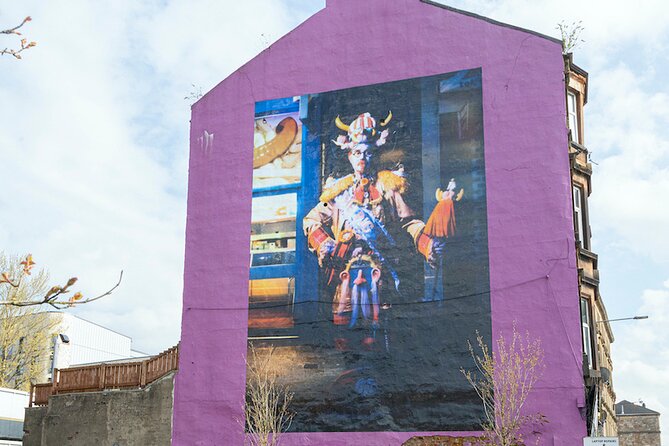
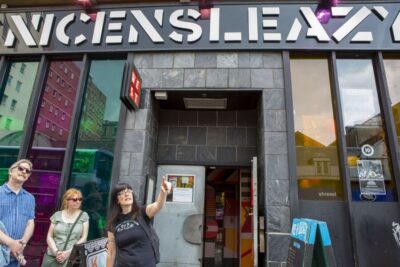
You begin at Clutha & Victoria Bar on Bridgegate, right where Merchant City energy gathers. The Clutha Bar is famous for live music, and the tour’s first stop leans into that atmosphere in a visual way: the walls are covered with murals that reflect Glasgow’s music diversity across time.
This is a great opening because it sets the tone fast. Instead of starting with a lecture, the guide points you to specific visual cues—who, what, and why those scenes mattered—then links them to the venues you’ll see later. It’s also a good reset moment if you’re arriving from public transit and need a quick orientation. You’ll get your bearings, then you’re off.
The only drawback here is also the nature of a good start: you’ll probably want extra photos. So keep your camera ready, but don’t get so stuck shooting that you fall behind the group.
Stop 2: Britannia Panopticon Music Hall, with stories even outside
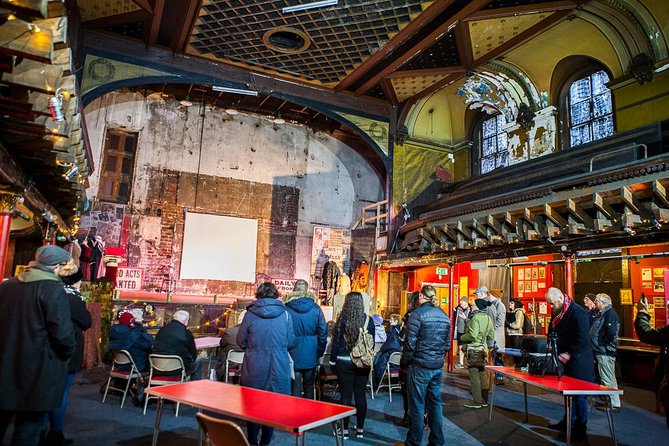
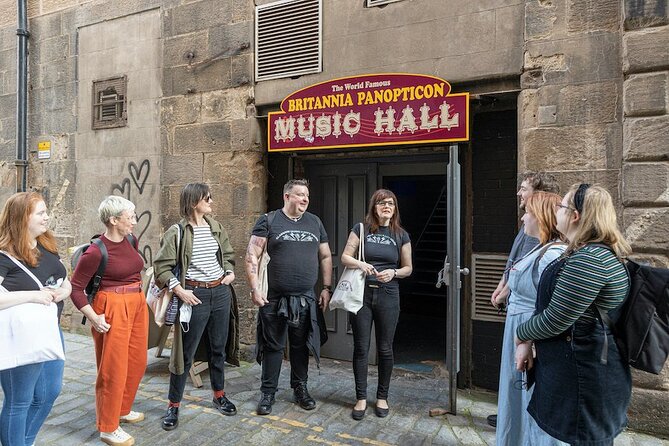
Next comes the Britannia Panopticon Music Hall, often described as Britain’s oldest surviving music hall—and it’s still a working venue. It has a reputation for hosting big talent across eras, from Scottish performers like Harry Lauder to international names such as Cary Grant and Stan Laurel.
Now, the important current detail: you won’t have access inside because of Covid-related limitations. That said, you still get real value. The guide uses the stop to explain what you’d notice if you were seeing the space in full, and why the Panopticon’s role in music theatre matters to Glasgow’s identity.
In practice, you’ll treat this as a “context stop.” You’ll look at the building’s presence and listen for the guide’s connections—how music halls shaped performance culture, how they bridged eras, and how Glasgow became good at nurturing distinct styles.
If you’re hoping for a full interior walk-through, temper expectations. But if you want a strong narrative and a sense of place, this stop still delivers.
Stop 3: City Halls & Old Fruitmarket, where a gig helped change things
This stop is about location as power. The City Halls and Old Fruitmarket have hosted memorable gigs, and one of the tour’s most striking stories is linked to The Stranglers. That concert is tied to the moment punk rock got banned in Glasgow.
That doesn’t mean you’ll hear a dry policy lecture. What makes this part work is the guide’s framing: music isn’t only art; it’s also public reaction, institutions, and boundaries people try to enforce. Seeing the places where those moments happened helps you understand why Glasgow’s music scene has always had personality and friction.
From a visitor standpoint, this is one of those stops that feels quick but sticks in your memory. Even if you don’t know every band mentioned, the story gives you a lens to interpret the city afterward.
More guided walks worth the shoe leather around Glasgow
- Glasgow City Centre Walking Tour with Local Guide★ 5.0 · 1,326 reviews
- Glasgow: Ghouls, Ghosts & Gruesome Tales Guided Walking Tour★ 4.9 · 887 reviews
- Glasgow: City Center Guided Walking Tour★ 4.7 · 759 reviews
- Glasgow Street Art Daily Walking Tour: 2pm★ 5.0 · 648 reviews
- Gander Walking Tours in Glasgow★ 5.0 · 506 reviews
Stop 4: Tron Theatre and the Hellfire Club twist
The tour continues to the Tron Theatre, now a major theatre and concert venue. The reason this stop matters is its layered past. The building’s history includes a devastating date involving the notorious Hellfire Club.
This is where the walk becomes more than music appreciation. You start seeing how entertainment spaces in Glasgow have survived storms—literal and social—and how that survival feeds modern culture. Tron works as a “bridge” stop: you can go from music scene context into broader city history without losing momentum.
Keep an eye out for architectural details and the theatre’s feel from the street. You’ll often miss that kind of character if you’re just passing through. Here, the guide points you to what to notice so the place feels alive.
Stops 5–6: Barrowland Ballroom and Barrowland Park’s art trail

Now you hit the core of Glasgow’s gig culture. The Barrowland Ballroom is much-loved by people who grew up going to shows, and its history is described as colourful in the way only a venue with serious stage time can be. This is the stop where you get the vibe: Glasgow loves live music not as a once-a-year event, but as a regular part of identity.
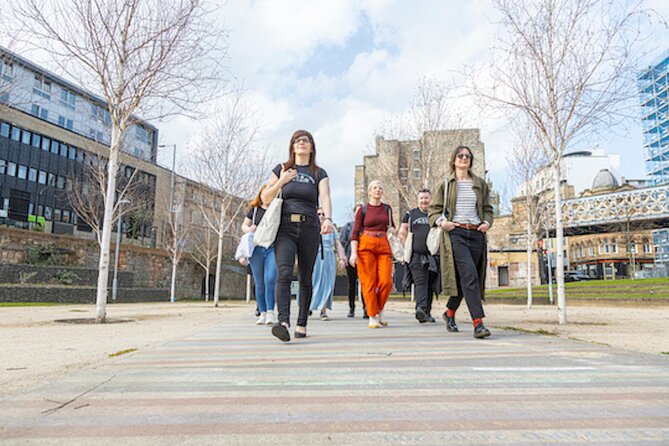
Directly after, you move to Barrowland Park, specifically the Barrowland Pathway artwork. This is not just decoration. It functions like a map of performances and names—The Smiths, Simple Minds, David Bowie, and Bob Dylan all show up in the art trail. The guide ties these visuals to stories about who played there and why those shows mattered.
This section is ideal for two kinds of travelers:
- You’re a music fan who wants names and context, not just venue photos.
- You’re a curious city explorer who wants to understand why a place feels like a magnet for artists.
Two small practical notes. First, this is a popular photo area, so expect stops to take a little longer if you’re shooting. Second, because it’s outdoors, check the weather before you start and dress accordingly.
Stop 7: St Andrews in the Square, a church turned music venue
Next is St Andrews in the Square – Glasgow. This is an 18th-century church that’s been repurposed into a live music venue. That transformation alone makes it memorable, but the tour adds cultural context too, including its lively links to major names in Scotland’s cultural history.
Even if you don’t recognize every historical reference, the impact is easy to feel. Church architecture changes how sound behaves, how crowds move, and how performances land emotionally. A place like this makes you think about how Glasgow keeps reusing old structures for new art.
This stop also works as a nice emotional reset. After Barrowland energy, St Andrews gives you a different kind of mood—more reflective, more theatrical, and often a little more graceful from the street.
Stop 8: King Street’s King’s Court and the theories behind Glasgow’s sound
You finish on King Street at King’s Court. This is where the tour’s final move happens: your guide reveals theories about why Glasgow developed such a unique music scene.
The tour also points you to the area’s ongoing music presence. You’ll hear about Postcard Records, The 13th Note, and Mono Bar as part of the story—past and present in one neighborhood. The point isn’t to force you into a single interpretation. It’s to give you a few plausible explanations, then let you take the street-level clues and make your own connections.
This ending is practical, too. King Street is a convenient place to continue your day—grab a snack, wander toward more venues, or plan a pub evening based on what your guide helped you understand.
The Mono Cafe Bar discount: a small extra that adds up
Included with your ticket is a voucher for 20% off food at Mono Cafe Bar. It’s a modest perk, but it’s exactly the kind that makes value feel real instead of theoretical.
If you’re pacing yourself through the walk, you’ll appreciate a meal option nearby rather than hunting across town afterward. Even if you don’t buy a full meal, you can use the discount for something quick so you don’t end up paying full price just because you’re hungry and it’s convenient.
Practical tips so the walk stays fun (not frantic)
A few details matter more than they look:
- Start point: Meet at Clutha & Victoria Bar, 159 Bridgegate, Glasgow G1 5HZ.
- End point: The tour wraps on King Street at King Street area, King St (near King’s Court).
- Arrive early: Be there 10 minutes before the 11:00 am start, so you start on time.
- Wear walking shoes: You’ll cover enough ground for a true city walk, not a short shuffle.
- Plan for weather: The tour runs in all weather, so bring a layer and rain protection if needed.
The tour is set up so most people can participate. If you have mobility concerns, the key step is to contact the provider ahead of time to discuss what will work for you. Service animals are allowed, and the meeting points are near public transportation, which helps if you’re juggling bus or train timing.
Also, you’ll use a mobile ticket, which is easy—no printing, no hunting for lost confirmations.
Should you book this Glasgow music walking tour?
Book it if you want a Glasgow experience that’s built around music venues and real stories, not just sightseeing checklists. It’s a good fit for first-time visitors who want direction and second-time visitors who want a new angle on the city.
Skip it (or at least adjust expectations) if your top priority is entering inside historic buildings on this specific day. The Panopticon interior access is currently limited, so the Panopticon stop will be narrative-focused rather than a full walkthrough.
If you’re booking, I’d aim to reserve ahead since the tour is commonly booked about a month out. And if you care about authenticity, you’re in the right place: guides like Fiona and Phil bring that grounded, music-scene perspective that turns a walk into a story you can carry around after you leave.
FAQ
How long is the Merchant City Music Walking Tour of Glasgow?
It runs for about 2 hours.
Where do I meet the tour?
You meet at Clutha & Victoria Bar, 159 Bridgegate, Glasgow G1 5HZ. The tour ends on King Street near King’s Court.
What time does the tour start?
The start time is 11:00 am.
Is the tour in English?
Yes, it’s offered in English.
Is there a discount included?
Yes. Your ticket includes a voucher for 20% off food at Mono Cafe Bar.
Does the tour run in bad weather?
The tour operates in all weather conditions, so dress appropriately.
What’s the deal with Britannia Panopticon access?
Access to Britannia Panopticon Music Hall is not available at present, so you’ll get the stories even though you can’t go inside.
What is the cancellation policy?
You can cancel for free up to 24 hours in advance for a full refund. If you cancel less than 24 hours before the start time, the amount paid is not refunded.
More Tours in Glasgow
- Glasgow: Celtic Park Stadium Tour
★ 4.9 · 3,336 reviews - Guided Celtic Park Stadium Tour
★ 5.0 · 3,136 reviews - Glasgow: City Sightseeing Hop-On Hop-Off Bus Tour
★ 4.5 · 3,095 reviews - From Glasgow: Oban, Glencoe, Highland Lochs & Castles Tour
★ 4.9 · 2,123 reviews - City Sightseeing Glasgow Hop-On Hop-Off Bus Tour
★ 4.5 · 1,873 reviews
More Street Art & Music Walks in Glasgow
- Glasgow Street Art Daily Walking Tour: 2pm
★ 5.0 · 648 reviews - Glasgow: Street Art Guided Walking Tour
★ 4.8 · 385 reviews - Glasgow’s Music Mile Walking Tour
★ 5.0 · 69 reviews - Glasgow’s Music Mile Tour
★ 4.9 · 28 reviews - Stuck in the 90s A Nostalgic Music Experience
★ 5.0 · 22 reviews
More Tour Reviews in Glasgow
- Glasgow: Celtic Park Stadium Tour
★ 4.9 · 3,336 reviews - Guided Celtic Park Stadium Tour
★ 5.0 · 3,136 reviews - Glasgow: City Sightseeing Hop-On Hop-Off Bus Tour
★ 4.5 · 3,095 reviews - From Glasgow: Oban, Glencoe, Highland Lochs & Castles Tour
★ 4.9 · 2,123 reviews - City Sightseeing Glasgow Hop-On Hop-Off Bus Tour
★ 4.5 · 1,873 reviews
Still browsing? A handful of other Glasgow trips worth a place on the list





Glasgow Street Art & Music Tours, compared.
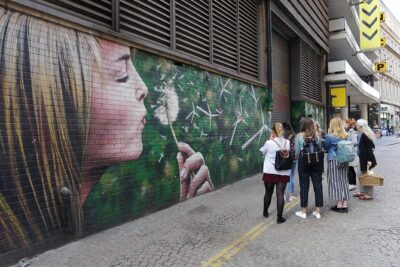 ★ 5.0Glasgow Street Art Daily Walking Tour: 2pmFrom $19648 reviews
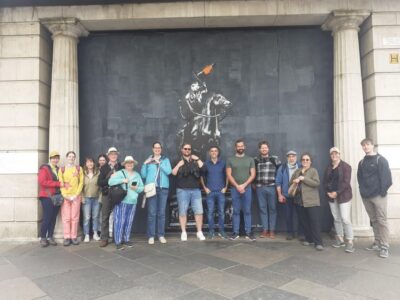 ★ 4.8Street Art Guided Walking TourFrom $16385 reviews
 ★ 5.0Glasgow’s Music Mile Walking TourFrom $2769 reviews
 ★ 4.9Glasgow’s Music Mile TourFrom $2628 reviews
 ★ 5.0Stuck in the 90s A Nostalgic Music ExperienceFrom $3822 reviews
 ★ 4.8Merchant City: Past and Present Music TourFrom $2619 reviews
Browse the lists this tour appears in