
Reviewed · HISTORICAL TOURS
Glasgow: The Magnificent and Mysterious History of Glasgow
Glasgow has secrets in every side street. In just 2.5 hours, you get a guided walk that connects the city’s 6th-century beginnings to 19th-century empire wealth, then lands you in today’s creative lanes, with architecture and street life doing the talking.
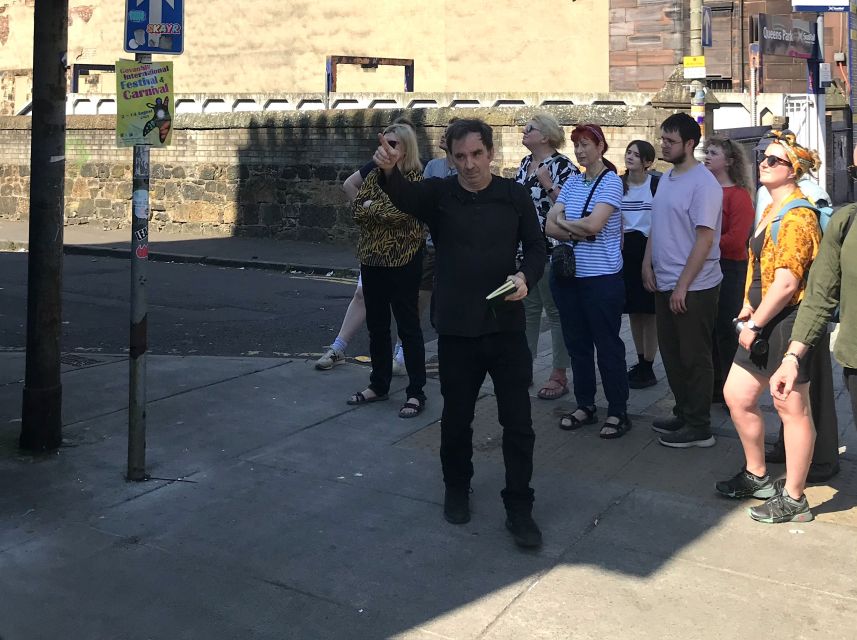
I especially like the storytelling. On recent tours, guides such as Henry and Bruce (and others like Ben and James) brought the people behind the buildings to life, with wry Scottish humour and clear explanations that helped me understand Glasgow, not just see it. I also like the stop list, because it mixes big civic monuments like Glasgow City Chambers with smaller, offbeat corners like the Britannia Panopticon and the Ramshorn Church.
One consideration: it’s a rain-or-shine walking route. You’ll be on your feet for about 2.5 hours (often around 4 km), so you’ll want comfortable shoes and rain gear, and you should skip it if you have low fitness or mobility limits.
In This Review
- Key highlights you’ll notice right away
- Why This Glasgow History Walk Works in 2.5 Hours
- Starting at Costa Coffee by George Square: Get Your Bearings Fast
- The Civic Heart: City Chambers, Cenotaph, Walter Scott, and Burns
- Queen Street and the Merchant City: Where Wealth and Trade Left Scars (and Styles)
- Hutchesons Hall, Fruitmarket, Candleriggs: Victorian Glasgow in Motion
- Sharmanka Kinetic Theatre and the Britannia Panopticon: Modern Art, Old Music-Hall Magic
- Briggait, Saltmarket, High Street: Old Market Streets to Present-Day Small Businesses
- The Ramshorn Church Finish: A Calm Ending to a City That Talks Back
- The Guides Are the Difference: Henry, Bruce, Ben, and James
- What You’ll Learn Along the Way (Without Feeling Like School)
- Itinerary Walkthrough Tips: How to Get the Most From Every Stop
- Price and Value: Is $18 Worth It?
- Should You Book This Glasgow Walking History Tour?
- FAQ
- How long is the tour?
- Where do I meet the guide?
- How much walking is involved?
- What kinds of places does the tour include?
- What should I bring?
- Is the tour only in English?
Key highlights you’ll notice right away
- A fast route with lots of stops: photo pauses plus guided walking, built for a 2.5-hour overview.
- City Chambers to Glasgow Cathedral: you start near George Square and finish close by the cathedral area.
- Trade-era Glasgow made visible: the Merchant City route centers merchants, traders, and the workers who built the city’s power.
- Architectural Glasgow in three eras: Georgian, Victorian, and Edwardian buildings show up in the streets you walk.
- Local culture, not just monuments: Britannia Panopticon and theatre-related stops add music-hall history to the mix.
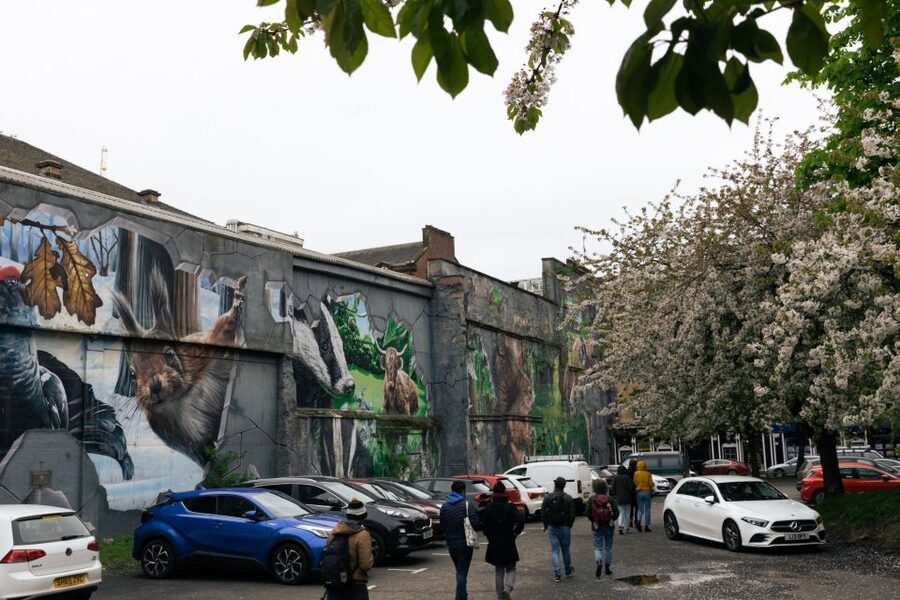
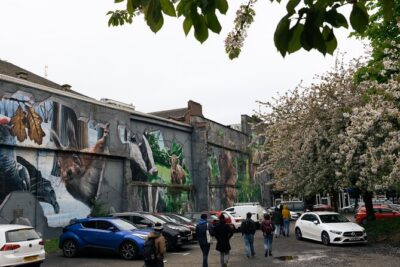
- Street art and murals are part of the story: multiple stops reference murals and modern Glasgow identity.
Why This Glasgow History Walk Works in 2.5 Hours
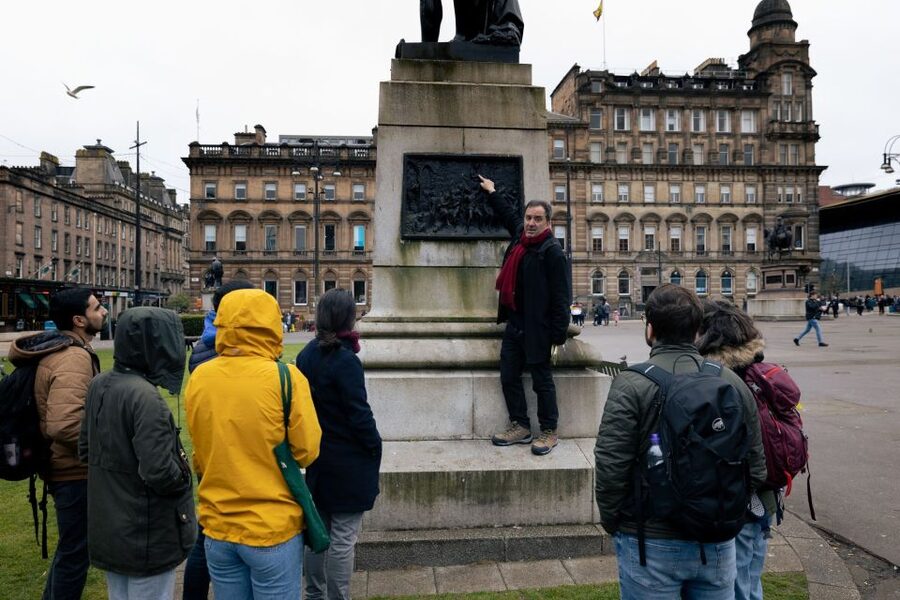
This tour is built for people who want context without spending a full day. You’re moving through the city center with a guide who ties what you’re seeing to what came before, from medieval roots through 19th-century prosperity and into modern Glasgow’s creative scene.
The pacing is a big reason it works. In practice, you get quick walking segments paired with frequent pauses to look closely—so you’re not just marching past buildings. Several recent groups noted it felt easy on the feet, though it still adds up to a real walking session.
At $18 per person, the value comes from the density of stops and the guide’s storytelling. You’re not paying for a single attraction—you’re paying for an explanation of many layers of the city in one go.
Dig into the backstory on more history walks in Glasgow
Starting at Costa Coffee by George Square: Get Your Bearings Fast
You meet just outside the main entrance to Costa Coffee on the north side of George Square. That’s a smart choice because it puts you in the middle of the action right away, with plenty of landmarks you can recognize later when you’re exploring on your own.
From the start, the guide sets the tone: Glasgow as an old city with an ongoing personality. You’ll hear about how a small town became a city, and why the wealth of the 19th century matters for the architecture you’ll see next.
The Civic Heart: City Chambers, Cenotaph, Walter Scott, and Burns
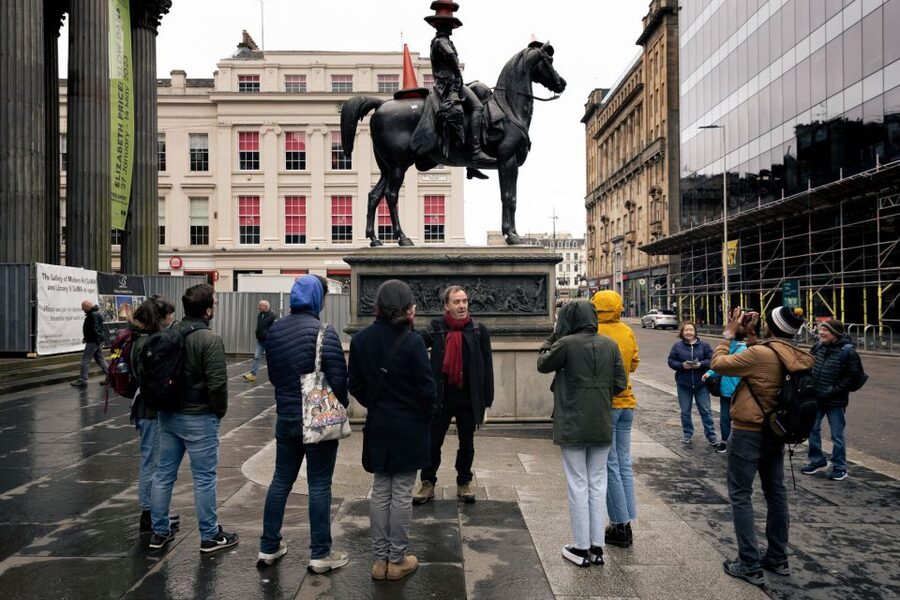
The first big visual hit is Glasgow City Chambers. You’ll have a photo stop plus a guided look, and the guide uses it to talk about civic pride and power—why Glasgow wanted to show the world it had arrived as a major city.
A few minutes later comes the Cenotaph. This stop helps the tour go beyond buildings and into memory—how public spaces can hold national stories in stone and proportion. Then you’ll walk past the Walter Scott Monument and a Monument to Robert Burns. Those names anchor the city in Scottish culture, and the guide uses them as jumping-off points for the personalities and public life behind the scenes.
A small detail that helps: each stop is short, but the guide gives you just enough to notice something specific when you look again later. If you usually breeze past statues and memorials, this kind of framing makes you see them as part of a bigger pattern.
Queen Street and the Merchant City: Where Wealth and Trade Left Scars (and Styles)
Once you move deeper toward the Merchant City area, the tour starts feeling more like a history lesson you can walk through. You’ll pass 155 Queen St and then hit Paesano Pizza (brief stop), before reaching the Tobacco Merchant’s House.
The Tobacco Merchant’s House is one of those buildings that makes sense immediately. The city’s prosperity didn’t come from nowhere—it was powered by merchants and trade, and the architecture reflects that confidence. Your guide connects the dots between the people who profited and the structures they could afford to build.
Next you’ll see Virginia Court. Courts like this are where you feel the city’s social history: close, enclosed spaces that shaped daily life for workers and families. The tour also includes the Merchant City Inn, plus a stop for Jacobean corsetry, which adds a different angle—how retail and specialized trades left their mark in the urban fabric.
Then it gets even more pointed. You’ll stop at the Old Police Post, and later at Rab Ha’s Hotel. These aren’t just odd names on street corners; they’re reminders that every big economic story also comes with rules, enforcement, and the everyday friction of city life.
Hutchesons Hall, Fruitmarket, Candleriggs: Victorian Glasgow in Motion
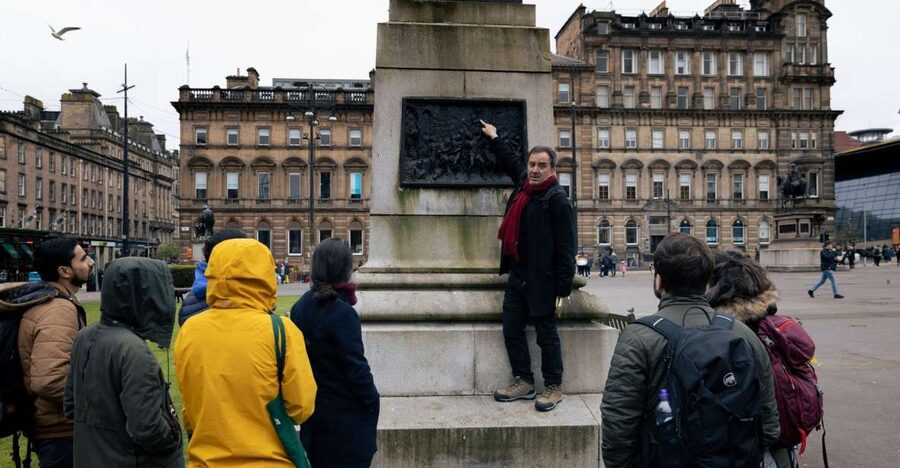
One of the best parts of the walk is how it keeps switching scales. You’ll move from grand architecture to smaller streets and lanes, so the city feels lived-in rather than staged.
You’ll stop at 1802 @ Hutchesons Hall, a clearly date-linked marker that helps you feel the timeline in your feet. After that, you’ll find BOW DOWN, HONOUR THE ROOTS (#29 Mural Trail)—a reminder that Glasgow’s “present day” identity is not separate from its past. It’s layered on top.
Then comes City Halls & Old Fruitmarket. This area gives you the sense of a working city—public space meeting commerce—without needing to guess. The guide’s narration helps you picture what these areas were for, not just what they look like now.
After that, Candleriggs and Tron Theatre bring the energy back. The theatre stop is useful because it ties entertainment to the city’s wider story, not just as fun, but as a cultural expression shaped by economics and community life. If you’ve ever wondered why Glasgow feels so theatrical, this is where the explanation starts.
- Glasgow: Celtic Park Stadium Tour★ 4.9 · 3,336 reviews
- Guided Celtic Park Stadium Tour★ 5.0 · 3,136 reviews
- Glasgow: City Sightseeing Hop-On Hop-Off Bus Tour★ 4.5 · 3,095 reviews
- From Glasgow: Oban, Glencoe, Highland Lochs & Castles Tour★ 4.9 · 2,123 reviews
- City Sightseeing Glasgow Hop-On Hop-Off Bus Tour★ 4.5 · 1,873 reviews
Sharmanka Kinetic Theatre and the Britannia Panopticon: Modern Art, Old Music-Hall Magic
Glasgow is often described through its Victorian architecture, but this route also puts creativity front and center. At Sharmanka Kinetic Theatre, you’ll get a quick photo stop and guided context that helps connect the city’s modern arts culture to older patterns of spectacle and public imagination.
Then you’ll reach the Britannia Panopticon area via The Friends of The Britannia Panopticon Music Hall Trust (SCIO). This is one of the standout stops because the tour frames it as world history in local hands—specifically calling it the world’s oldest surviving music hall. You’ll hear how preservation and local effort keep older entertainment culture from disappearing.
A nice touch is the way the route keeps pop culture and famous names in the conversation. You’ll pass Mural Trail #.09 Billy Connolly, which makes it easy to connect Glasgow’s humour and performance traditions to the city’s visual language today.
Briggait, Saltmarket, High Street: Old Market Streets to Present-Day Small Businesses
After the music-hall moment, the walk keeps rolling through street-level Glasgow. You’ll stop at The Briggait, a market area that signals how trade and community gathering shaped the city’s day-to-day rhythm.
From there, you’ll pass Bare Bones Chocolate Ltd (a quick stop) and then head toward Saltmarket. That sequence matters because it shows the city as a working place where old streets still host new businesses. It’s not frozen in Victorian time; it keeps moving.
Next up are Mercat Cross and High Street. The Mercat Cross reference is the clearest signal that you’re standing on (and walking past) older structures tied to markets and civic organization. High Street then gives you a chance to see how the city’s main routes concentrate history.
You’ll also stop at Babbity Bowster and Fellow Glasgow Residents Mural. These are part of Glasgow’s visual storytelling, and the guide uses them to show that murals and public art are not extras. They’re one of the city’s ways of arguing with the past—sometimes funny, sometimes reflective.
The Ramshorn Church Finish: A Calm Ending to a City That Talks Back
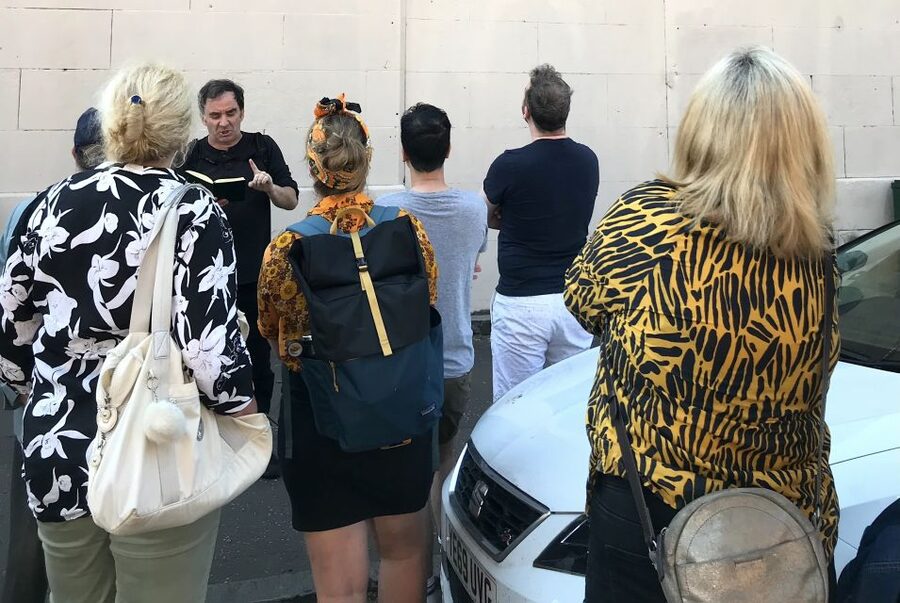
The tour ends at Glasgow Cathedral, but you’ll reach it through the final stretch that includes The Ramshorn. This stop gives you a quieter tone after the busier lanes, and it helps make sense of why Glasgow’s older religious buildings still matter in the middle of a modern city.
By the time you’re near the cathedral area, you’ll have a clearer mental map. You won’t just remember where you walked—you’ll understand why those streets connect the medieval city, the merchant era, and the modern cultural Glasgow you see now.
The Guides Are the Difference: Henry, Bruce, Ben, and James
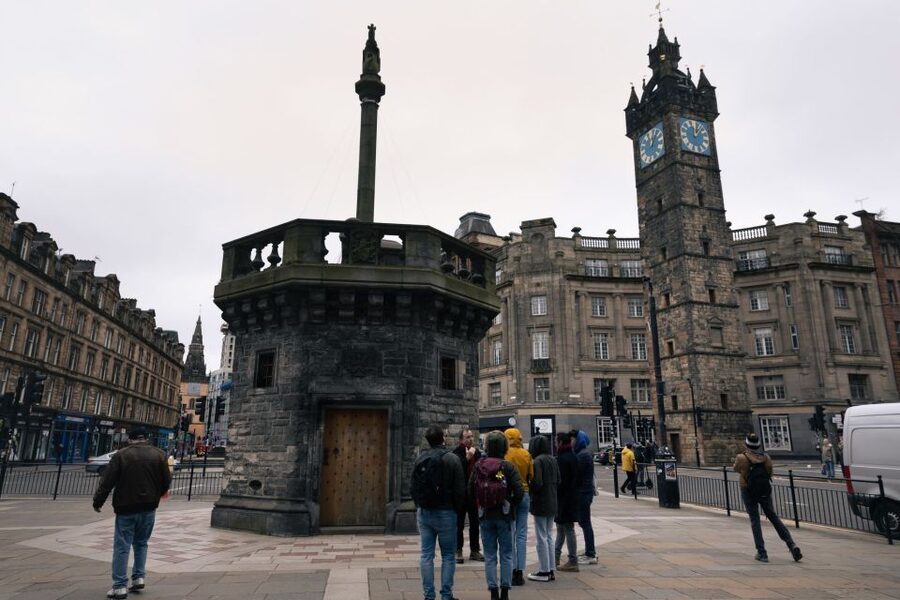
What makes this tour consistently hit a high rating is the way the guide performance turns the route into a story. People repeatedly mention guides like Henry and Bruce for strong command of detail and a sense of timing—knowing when to add a fact, when to pause, and when to let a street scene sink in.
You’ll also notice how the guide handles questions. Several groups mentioned that the guide adapts as you ask things—big-picture history, social context, or how to interpret the buildings in front of you. That flexibility helps if you’re more curious than typical, or if you’re the type who needs one extra explanation before it clicks.
One story that came up in feedback is Saint Mongo (often tied to Glasgow’s older religious narrative). Even if that name doesn’t mean much at first, the guide’s storytelling makes it feel relevant to the city you’re standing in.
And yes, humour helps. Guides were praised for wry Scottish humour and for keeping the mood up, including when weather was bad.
What You’ll Learn Along the Way (Without Feeling Like School)
This walk is about turning facts into a feel for the city. You’ll hear about Glasgow’s 6th-century origins, then how wealth, power, and prosperity shaped it in the 19th century—including the idea that it became known as the Second City of the Empire.
You’ll also get the harder edges, too: scandals and darker secrets show up in the narrative, not as shock value, but as context for the city’s rise. That’s important because Glasgow’s beauty and swagger didn’t come only from good news.
Finally, the tour brings you to modern Glasgow as a cosmopolitan, creative city. You’ll see evidence of that in places like murals, theatre culture, and surviving venues like the Britannia Panopticon.
Itinerary Walkthrough Tips: How to Get the Most From Every Stop
To maximize your experience, plan to do a lot of looking, not just listening. Here’s what helps in real time:
- Bring rain gear. Glasgow weather changes fast, and the tour runs rain or shine.
- Expect quick photo stops. Many points are brief, so have your camera ready, but keep moving so you don’t miss the narration.
- Wear shoes with grip. You’ll be walking through sidewalks and side streets where the pavement can be slick.
- Ask one question early. If the guide is already answering, you’ll get a smoother experience the rest of the way.
There’s also a clear fit issue: the tour isn’t set up for low mobility, and it isn’t aimed at children under 10. If you’re bringing a stroller or managing kids, you’ll want to check what will work for your group in advance.
Price and Value: Is $18 Worth It?
At $18, you’re buying three things: a guide, a structured route, and a dense bundle of history you’d have to piece together yourself. For many visitors, the decision comes down to time. You only have a couple of hours? This tour makes that time count.
The other part of value is how you’re guided. Multiple reviews highlighted that guides can explain social and cultural context, not just list dates and names. You leave with a better sense of why Glasgow looks the way it does, and you’ll spot details later that you would have missed on your own.
Should You Book This Glasgow Walking History Tour?
Book it if you want a serious introduction to Glasgow that still feels fun and human. It’s a strong choice for first-timers who want the core story fast, and it’s also a smart move for people who already live in the city and want new angles—especially street art, performance history, and the Merchant City layer.
Skip it if you can’t handle 2.5 hours of walking in changeable weather. And if your priority is one single attraction (like a museum visit), you might prefer a more focused option.
If you’re ready for a guided route packed with architecture, characters, and a little darkness under the shine, this is a very practical way to understand Glasgow in one afternoon.
FAQ
How long is the tour?
The tour runs for about 2.5 hours.
Where do I meet the guide?
You meet just outside the main entrance to Costa Coffee, on the north side of George Square.
How much walking is involved?
You’ll walk for the full tour duration with frequent stops. The walking requires a reasonable level of fitness.
What kinds of places does the tour include?
You’ll see civic landmarks like Glasgow City Chambers, memorials, Merchant City streets and buildings, theatre/music-hall sites like the Britannia Panopticon, and you’ll end near Glasgow Cathedral.
What should I bring?
Bring comfortable shoes and rain gear, plus weather-appropriate clothing since Glasgow weather is changeable.
Is the tour only in English?
Yes, the live guide delivers the tour in English.
More of the Backstory in Glasgow
- Glasgow: Historical Walking Tour: Guided by a local actor
★ 4.5 · 198 reviews - Glasgow: Pubs & History Walking Tour with Beer Tasting
★ 5.0 · 81 reviews - Glasgow: Pubs & History Guided Walking Tour with Beer
★ 4.9 · 74 reviews - The Magnificent and Mysterious History of Glasgow
★ 5.0 · 49 reviews
More Tour Reviews in Glasgow
- Glasgow: Celtic Park Stadium Tour
★ 4.9 · 3,336 reviews - Guided Celtic Park Stadium Tour
★ 5.0 · 3,136 reviews - Glasgow: City Sightseeing Hop-On Hop-Off Bus Tour
★ 4.5 · 3,095 reviews - From Glasgow: Oban, Glencoe, Highland Lochs & Castles Tour
★ 4.9 · 2,123 reviews - City Sightseeing Glasgow Hop-On Hop-Off Bus Tour
★ 4.5 · 1,873 reviews
Still browsing? A handful of other Glasgow trips worth a place on the list



Historical Tours, compared.
 ★ 4.5Historical Walking Tour: Guided by a local actorFrom $20198 reviews
 ★ 5.0Pubs & History Walking Tour with Beer TastingFrom $6381 reviews
 ★ 4.9Pubs & History Guided Walking Tour with BeerFrom $6274 reviews
 ★ 5.0The Magnificent and Mysterious History of GlasgowFrom $1749 reviews
Browse the lists this tour appears in