
Reviewed · HISTORICAL TOURS
Glasgow: Historical Walking Tour: Guided by a local actor
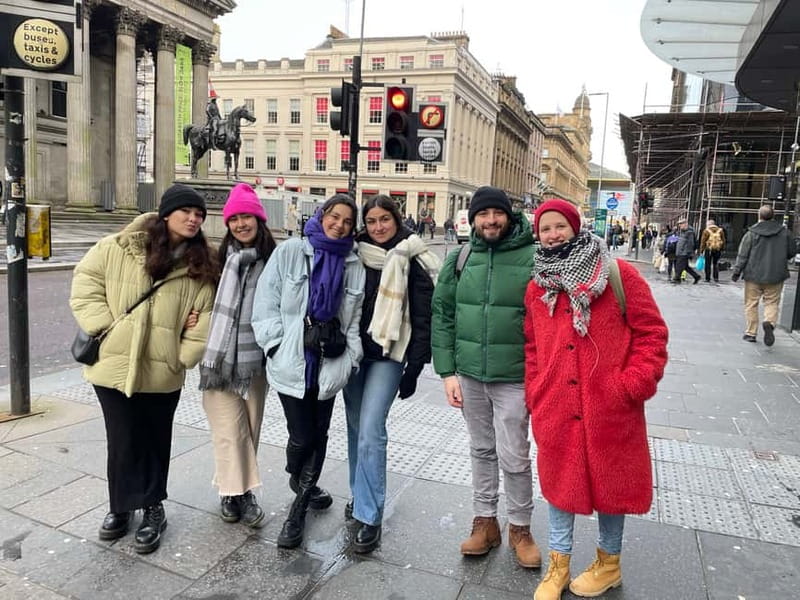
Glasgow history works best on foot. This actor-guided walking tour uses performance-trained storytelling to connect central landmarks with the city’s turning points, from early roots through empire-era power. You start in George Square and work your way toward Glasgow Cross, with stops that make buildings feel like characters.
I love how the guide treats the city like a stage. You’ll get jokes, dramatic flourishes, and clear context on why places like George Square and the Merchant City look the way they do. I also love the mix of scale: big, iconic architecture alongside the narrow lanes that help explain how trade shaped Glasgow.
One thing to consider: it’s only two hours. You’ll see key sites such as Glasgow Cathedral, the Gallery of Modern Art, and the Police Museum from the outside or via short timed stops, so plan to return later if you want longer museum time.
In This Review
- Key things I’d look forward to
- George Square is where Glasgow starts acting
- What the guide’s actor training changes for you
- From City Chambers to Merchants’ House: reading power in architecture
- A small practical note on comfort
- Early Christian and Roman clues you can actually spot
- Merchant City lanes: where trade money and politics meet
- The American War of Independence may have been sparked locally
- Glasgow Cathedral, Gallery of Modern Art, and the Police Museum stops
- Museums on the tour are a teaser, not the full course
- Irish immigration and Glasgow Cross: the emotional end of the story
- End point detail to note
- Walking time, pacing, and who this tour fits best
- Price: why $20 is a reasonable deal for what you get
- What to bring so the experience stays easy
- Should you book this Glasgow historical walking tour?
- FAQ
- What is the duration of the Glasgow historical walking tour?
- Where do I meet the guide in George Square?
- Where does the tour end?
- Does the tour run in bad weather?
- Is the walking route flat and is it wheelchair accessible?
- What language is the tour guide speaking?
- Which attractions are covered during the 2 hours?
- Are museum visits included in the price?
Key things I’d look forward to
- Actor-led, script-ready storytelling that turns streets into scenes
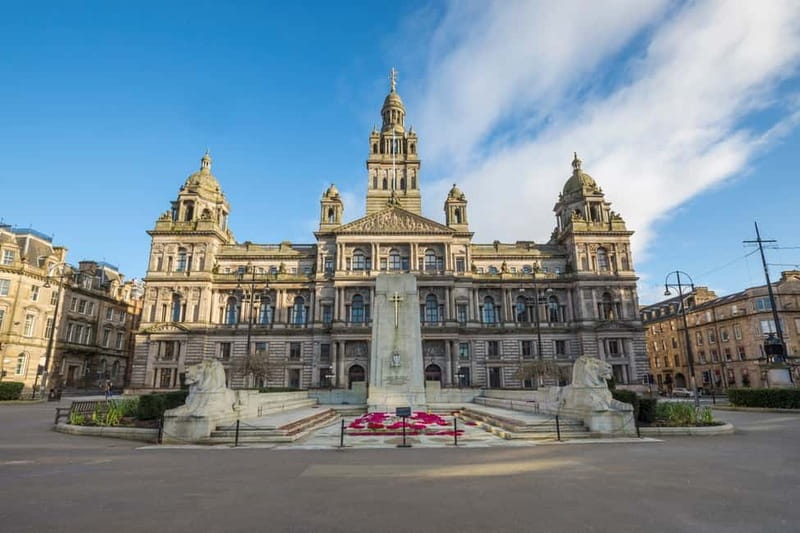
- George Square architecture (City Chambers, Merchants’ House, City Council) explained in plain English
- Merchant City lanes where trading wealth and social change connect
- Socialism and the British Labour Party origins discussed in context
- Museum pointers you can use later, since most Glasgow museums and galleries are free
- A dramatic finish at Glasgow Cross/Mercat Cross, tied to executions and public life
George Square is where Glasgow starts acting
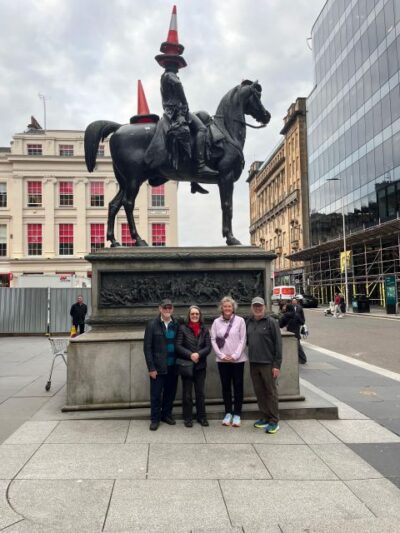
Your tour begins at George Square, meeting your guide between the lions. The lions sit behind the White Granite Cenotaph/War Memorial area, so it’s usually easy to spot once you know what you’re looking for. If something shuts down the square, the meeting point shifts to the Piper Whisky Bar at the corner of Cochrane Street and George Square.
George Square is a smart place to start because it sets the visual argument of the city. Victorian-era civic buildings crowd the space, and the tour uses them to explain how Glasgow flexed its power. You’ll also hear why the square’s name connects to an English king, and that little detail matters because it ties local pride to imperial-era politics.
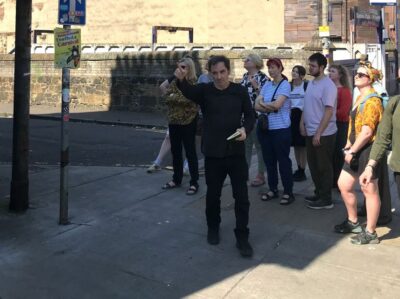
If you’ve ever visited a city where the history feels like it’s written on plaques, this tour is the opposite. The guide—drawn from the pool of actor-performers, with styles you may recognize such as Ian, Martin, Luke, Marty, or Gordon—does the work of making meaning out of stone, statues, and street layouts. You’re not stuck memorizing dates.
More guided walks worth the shoe leather around Glasgow


What the guide’s actor training changes for you
An actor doesn’t just “explain.” They pace. They raise and lower volume. They know when to slow down for a punchline and when to sharpen the point. That matters on a walking tour, because it keeps attention from drifting when the street turns and the buildings look similar.
From City Chambers to Merchants’ House: reading power in architecture
One of my favorite parts of this kind of walk is that it teaches you how to look. Here, you’ll spend time around George Square taking in the City Chambers, the Merchants’ House, and headquarters buildings connected to Glasgow’s civic system. Even if you don’t know architectural terms, your guide translates what the architecture signals: authority, wealth, and who got to shape policy.
The tour’s story threads through the square’s role as a public stage. You’ll connect it to Glasgow becoming the second city of the British Empire—not as a brag line, but as a cause-and-effect arc. Trade and shipbuilding helped bankroll grand buildings. Those buildings, in turn, reinforced who mattered in everyday life.
And yes, you’ll stop for photos and quick looks. The pacing stays friendly because it’s designed around short segments rather than long, monotonous stretches.
A small practical note on comfort
You’re walking around central streets on flat terrain, but you’ll still want comfortable shoes. The tour runs rain or shine, so bring weather-appropriate clothing. If you dress for comfort, the stories land better because your body isn’t busy complaining.
Early Christian and Roman clues you can actually spot
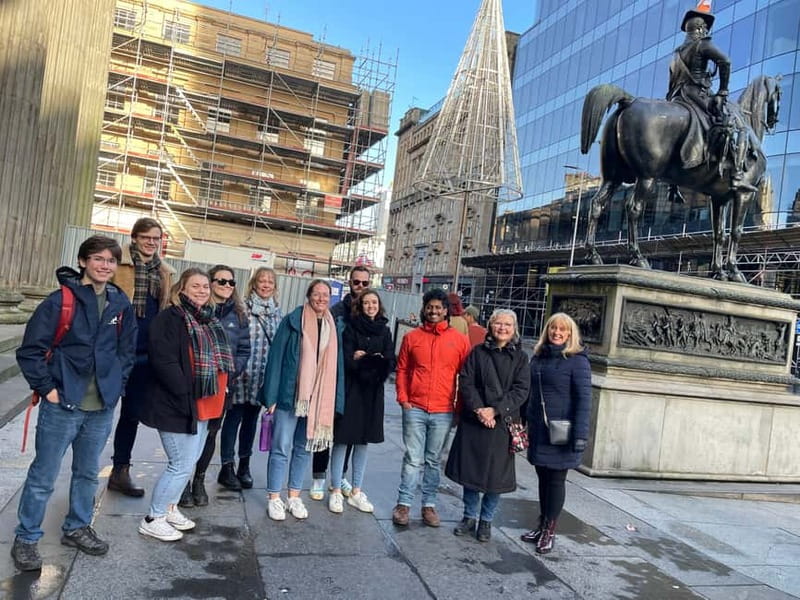
After George Square, the tour pivots from Victorian confidence to deeper time. You’ll hear about Glasgow’s early Christian and Roman heritage and how ancient tribes influenced the city’s development. This could feel abstract on a normal tour, but the guide keeps it tied to physical place: why this area mattered early, and how later Glasgow built on older routes and settlement patterns.
This is also where the actor format helps. Instead of a lecture, you get a timeline that flows like a story you’d tell friends over a pint—still factual, just more memorable. You’re given anchors you can carry with you when you’re walking back later on your own.
Let a Glasgow local lead the way on more guided outings in Glasgow
- Glasgow City Centre Walking Tour with Local Guide★ 5.0 · 1,326 reviews
- Glasgow: Ghouls, Ghosts & Gruesome Tales Guided Walking Tour★ 4.9 · 887 reviews
- Glasgow: City Center Guided Walking Tour★ 4.7 · 759 reviews
- Glasgow: Street Art Guided Walking Tour★ 4.8 · 385 reviews
- Glasgow: Tennent’s Brewery Guided Tour and Free Pint★ 4.8 · 262 reviews
Merchant City lanes: where trade money and politics meet
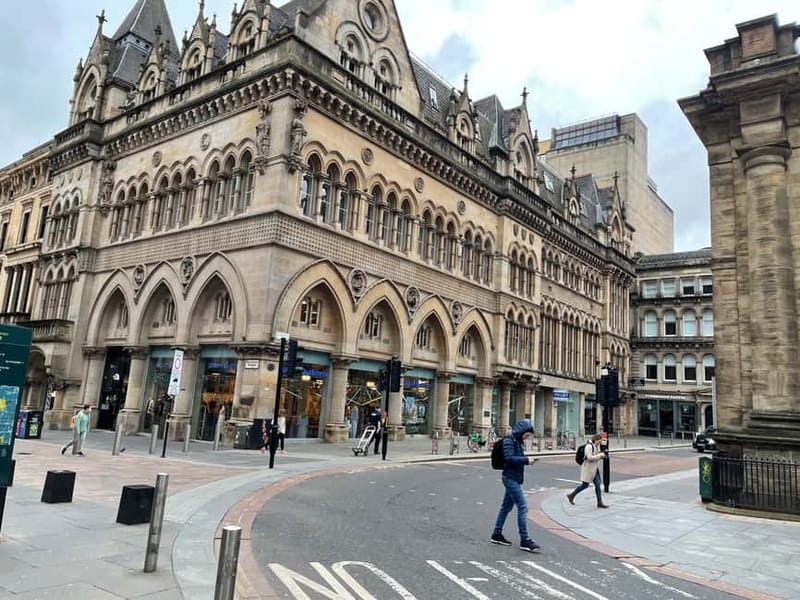
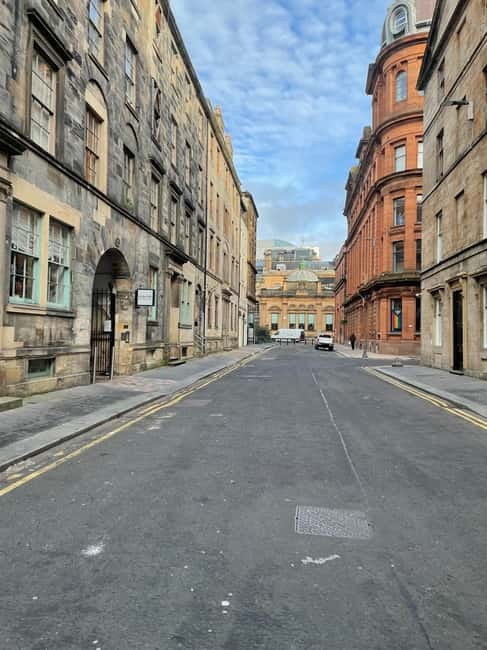
The biggest shift in mood is when you move into the Merchant City. You start catching sight of hidden alleys and lanes—tight routes that help you understand how goods and people moved. Those lanes aren’t just scenery. They’re part of the city’s logic: trade thrives on access, and Glasgow’s prosperity grew from that.
The tour connects this area to the move into a modern commercial district, including where commercial capitalism took root and where socialism and the British Labour Party began. That’s a big theme for a two-hour walk, and the guide keeps it grounded by tying ideas to places you can point at.
You’ll also head toward a shopping street area tied to the homes and palaces of the original trading barons. This is where the tour turns fortunes into lessons. Who made money, who lost it, and how the risks of commerce shaped real people—not just abstract economic systems.
The American War of Independence may have been sparked locally
One of the most intriguing points the tour brings up is the idea that the American War of Independence may have been set alight by Glaswegians. Even if you’ve studied the broader conflict before, this is a useful reminder that global events often have local fingerprints. Your guide frames it in a way that makes you look at Glasgow as an active player, not a distant observer.
Glasgow Cathedral, Gallery of Modern Art, and the Police Museum stops
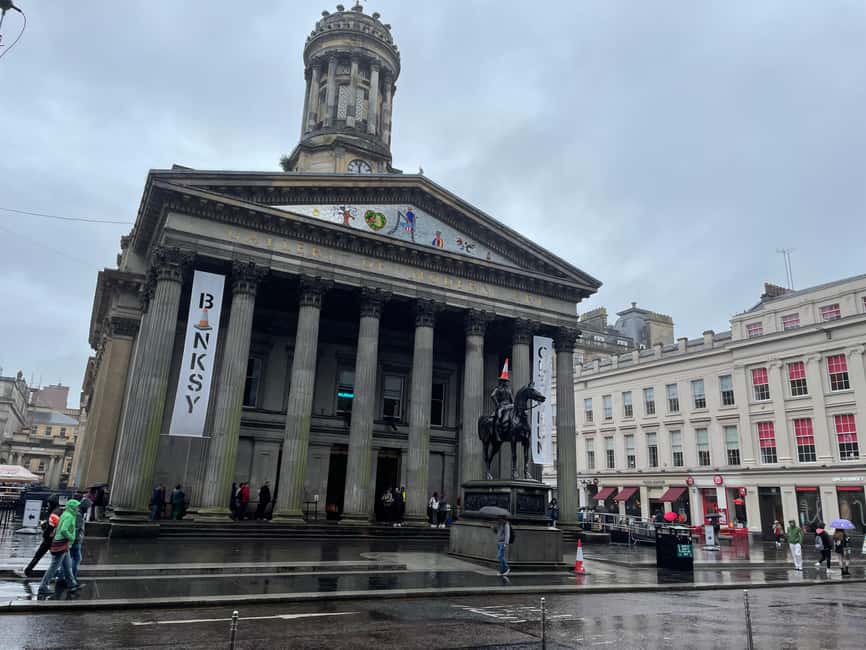
The tour builds toward major landmarks that most first-time visitors recognize, including Glasgow Cathedral. Even when you’re not spending long inside, it helps to have a guide connect the building’s role to the city’s changing identity over centuries. You’ll also learn about the area’s mix of religion, civic life, and power.
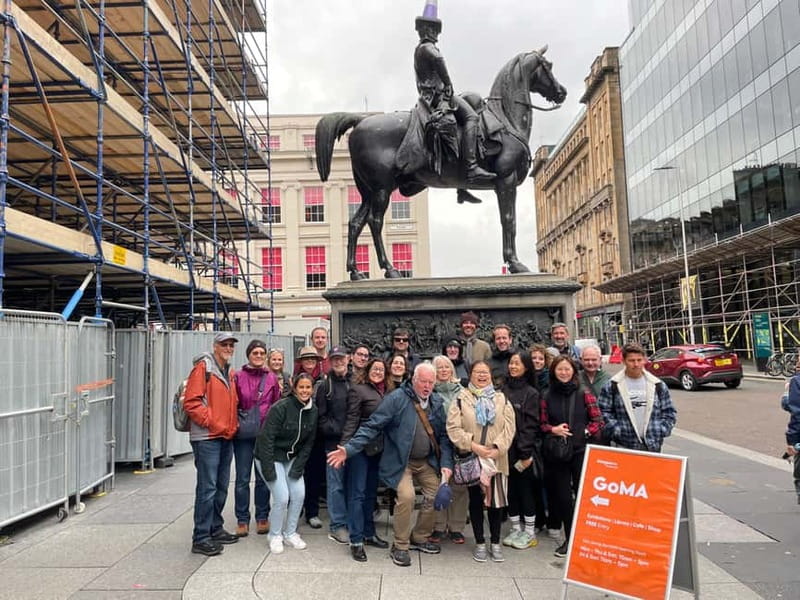
Next comes a stop around the Gallery of Modern Art. The tour focuses on collections and the meaning of what’s displayed, but the key value for you is pacing. The guide uses the museum stop to show how Glasgow didn’t just live in the past; it kept reinventing its public face.
Then you finish with the Police Museum at the end of the tour route. This is a strong choice because it adds a human angle. Law enforcement tells you how a city defines order, how authorities respond to change, and what ordinary life looked like when rules had teeth.
Museums on the tour are a teaser, not the full course
Here’s how to make this tour pay off: treat it like a preview. The tour notes that all Glasgow museums and galleries are free to visit. You won’t have time during the walk for long museum browsing, but your guide will point you toward what’s worth your time later.
If you’re trying to get value for a limited schedule, this is a smart setup. You get interpretation first, then you choose how deep you want to go after.
Irish immigration and Glasgow Cross: the emotional end of the story
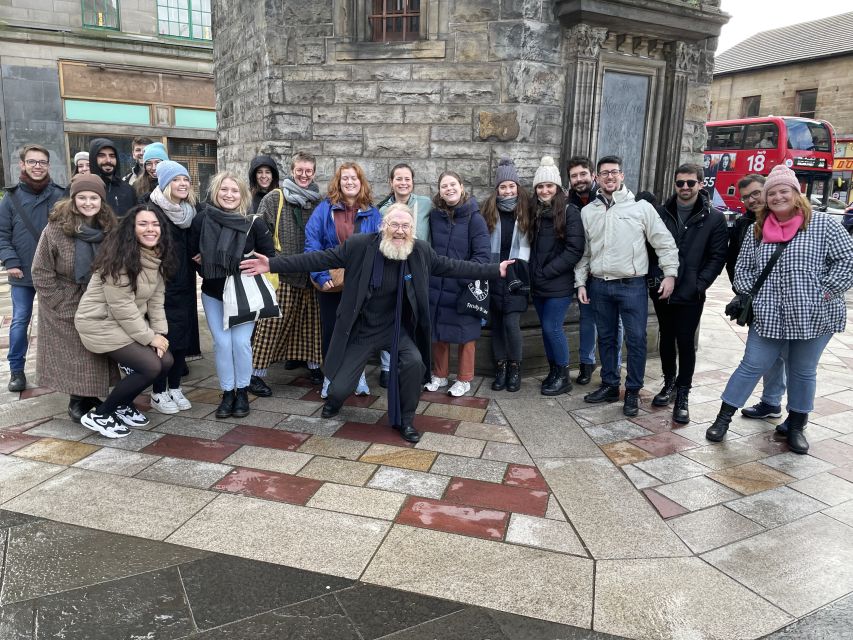
One of the tour’s threads highlights the influence of Irish immigrants on Glasgow’s growth. That’s important because it connects demographic change to jobs, neighborhoods, and the city’s evolving social fabric. You don’t have to be an expert to follow it; the guide keeps linking people, movement, and policy impacts back to street-level reality.
As you move toward the finish, you land at Glasgow Cross / Mercat Cross. This area is tied to public executions in earlier times, and the tour doesn’t treat that part as a spooky footnote. It’s presented as part of how public order worked and how people experienced justice.
It’s also an effective ending because it closes the loop from empire-era building glory to the everyday consequences of power.
End point detail to note
The activity describes finishing around Mercat Cross, and it also notes the tour ends back at the meeting point. In practice, expect to wrap up near the Cross area and get guided back to the general George Square area after the final story beat.
Walking time, pacing, and who this tour fits best
The tour runs about two hours. That length is perfect if you want a first look at central Glasgow without committing to a half day. It’s also long enough for the guide to cover a lot of ground and make several themes connect: empire, commerce, politics, immigration, and public life.
This tour is especially good for:
- First-time visitors who want an organized way to understand what they’re seeing
- People who like stories and humor more than museum-style quiet reading
- Travelers who want a local actor’s sense of pacing and performance
- Anyone who plans to revisit places like the cathedral, the Gallery of Modern Art, or the Police Museum on their own
It’s less ideal if you want long interior time in multiple museums. This isn’t that kind of day trip. It’s interpretation and orientation, then you choose your next stop.
Price: why $20 is a reasonable deal for what you get
At $20 per person for a two-hour walking tour, the value comes from two things: guided storytelling and curated focus. You’re paying for the guide’s ability to connect buildings, politics, and street layout into something you can remember. If you’ve ever wandered a city alone and felt like the plaques were doing all the work, this tour flips that relationship.
You also get an extra financial win if you plan to visit museums afterward. The tour reminds you that Glasgow museums and galleries are free to enter, and the guide points you toward what to check next. So you’re not paying again for basic museum entry—your cost stays mostly to your time and your own food breaks.
What to bring so the experience stays easy
Bring:
- Comfortable shoes for city walking
- A camera if you like architecture and street scenes
- Weather-appropriate clothing since it runs rain or shine
- Comfortable clothes that work for cool Scottish weather
The tour also states it’s wheelchair accessible and runs on flat terrain, which is a big plus for many visitors who still want history without steep climbs.
Should you book this Glasgow historical walking tour?
Yes, if you want a first-floor understanding of central Glasgow with a guide who can actually perform the story. The actor-led approach helps turn key landmarks—George Square, Merchant City lanes, Glasgow Cathedral area, the Gallery of Modern Art, and the Police Museum—into a coherent narrative. Ending at Glasgow Cross gives you the emotional gravity that a lot of sightseeing days skip.
Skip it if you’re chasing deep museum time or want a quiet, minimal-interaction tour. This is about walking + storytelling, not long indoor study sessions. For most people with two hours and curiosity, it’s a strong booking because it sets you up to explore the rest of the city with far better context.
FAQ
What is the duration of the Glasgow historical walking tour?
The tour lasts about 2 hours.
Where do I meet the guide in George Square?
Meet between the lions in George Square, just behind the White Granite Cenotaph/War Memorial.
Where does the tour end?
The route finishes at Mercat Cross/Glasgow Cross. The activity also notes it ends back at the meeting point area.
Does the tour run in bad weather?
Yes. The tour takes place rain or shine.
Is the walking route flat and is it wheelchair accessible?
Yes. The tour is on flat terrain and is wheelchair accessible.
What language is the tour guide speaking?
The tour is in English.
Which attractions are covered during the 2 hours?
You’ll cover George Square, the Merchant City area, and see stops associated with Glasgow Cathedral, the Gallery of Modern Art, and the Police Museum.
Are museum visits included in the price?
Museum and gallery entry in Glasgow is free, but there isn’t time to fully visit during the tour. The guide will point out museums and galleries so you can go later.
Keep Walking: More Guided Strolls in Glasgow
- Glasgow City Centre Walking Tour with Local Guide
★ 5.0 · 1,326 reviews - Glasgow: Ghouls, Ghosts & Gruesome Tales Guided Walking Tour
★ 4.9 · 887 reviews - Glasgow: City Center Guided Walking Tour
★ 4.7 · 759 reviews - Glasgow Street Art Daily Walking Tour: 2pm
★ 5.0 · 648 reviews - Gander Walking Tours in Glasgow
★ 5.0 · 506 reviews
More Tours in Glasgow
- Glasgow: Celtic Park Stadium Tour
★ 4.9 · 3,336 reviews - Guided Celtic Park Stadium Tour
★ 5.0 · 3,136 reviews - Glasgow: City Sightseeing Hop-On Hop-Off Bus Tour
★ 4.5 · 3,095 reviews - From Glasgow: Oban, Glencoe, Highland Lochs & Castles Tour
★ 4.9 · 2,123 reviews - City Sightseeing Glasgow Hop-On Hop-Off Bus Tour
★ 4.5 · 1,873 reviews
More Tour Reviews in Glasgow
- Glasgow: Celtic Park Stadium Tour
★ 4.9 · 3,336 reviews - Guided Celtic Park Stadium Tour
★ 5.0 · 3,136 reviews - Glasgow: City Sightseeing Hop-On Hop-Off Bus Tour
★ 4.5 · 3,095 reviews - From Glasgow: Oban, Glencoe, Highland Lochs & Castles Tour
★ 4.9 · 2,123 reviews - City Sightseeing Glasgow Hop-On Hop-Off Bus Tour
★ 4.5 · 1,873 reviews
Still browsing? A handful of other Glasgow trips worth a place on the list


Historical Tours, compared.
 ★ 4.9The Magnificent and Mysterious History of GlasgowFrom $18302 reviews
 ★ 5.0Pubs & History Walking Tour with Beer TastingFrom $6381 reviews
 ★ 4.9Pubs & History Guided Walking Tour with BeerFrom $6274 reviews
 ★ 5.0The Magnificent and Mysterious History of GlasgowFrom $1749 reviews
Browse the lists this tour appears in