
Reviewed · HISTORICAL TOURS
The Magnificent and Mysterious History of Glasgow
Glasgow mixes grit and wit. This walk threads together civic power, religion, wartime memory, and the city’s slightly scandalous side, all in one route from George Square toward the Cathedral.
I love how much you see for the price—big landmarks, plus side stops like the Gallery of Modern Art and even Paesano Pizza. I also love the way the stories connect, especially the Robert Burns monument, the Duke of Wellington statue’s traffic cone, and the civic buildings covered in sculpture.
One possible drawback: it’s a lot of ground in about 2.5 hours, with walking between stops and frequent listening breaks needed. If you prefer slower sightseeing or you get tired fast in the rain, plan for that.
In This Review
- Key points to know before you go
- Why this Glasgow walk is such a good orientation tool
- George Square to City Chambers: where Glasgow shows off its “we mean it” energy
- Robert Burns and the statues that explain Glasgow’s identity
- The Gallery of Modern Art and Paesano Pizza: old walls, modern pulse
- Wellington’s traffic cone and the Corinthian Club: when history turns playful
- Medieval street signals, candle-makers history, and the Hutchinsons-era idea of care
- Old Fruitmarket to Trongate 103: where trade met art
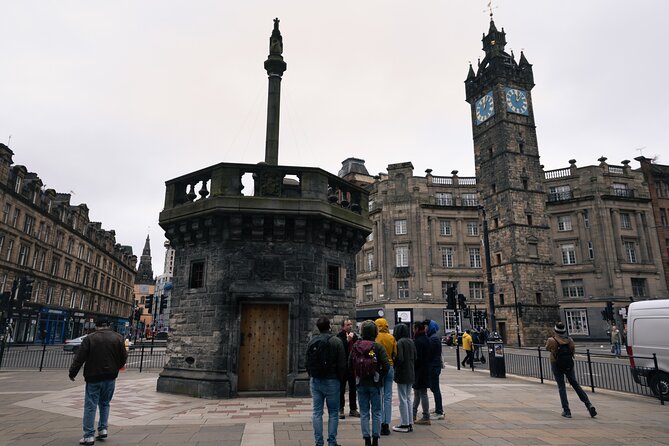
- Britannia Panopticon music hall and the Mercat Cross
- High Street, murals, and Ramshorn Theatre: the medieval spine to a 1824 story
- From the Royal Infirmary museum to Glasgow Cathedral and Provand’s Lordship
- Timing, weather, and how to get the most out of the walk
- Price and value: is $17.91 a fair deal for this many stops?
- Should you book the Glasgow history walk?
- FAQ
- How long is the Glasgow walking tour?
- Where does the tour start and end?
- What language is the tour in?
- Are there any admission fees at the stops?
- How big is the group?
- What if the weather is bad?
Key points to know before you go
- A fast orientation through central Glasgow, so you’ll know where things are afterward
- Free, stop-by-stop viewing at the landmarks listed on the route
- Quirky details that make famous names feel local, like Burns’ crowdfunding and the Wellington cone
- Street-level culture in the mix: murals, an arts center, and a working music-hall legacy
- A strong ending at Glasgow Cathedral plus the older neighborhoods and religious-life museum
Why this Glasgow walk is such a good orientation tool
This is the kind of tour that helps you stop guessing. You start near George Square, then move through the Merchant City core—where Glasgow’s money, manners, and myths all rubbed shoulders. If you’re only here for a day or two, you get a mental map fast.
The best value is how concentrated it is. You’re not paying to hop between far-flung neighborhoods. You’re getting a layered route: grand civic buildings, merchant-era addresses, working-market history, and then the Cathedral finish. The walking is real, though. Between highlights you’ll be on foot for roughly 40–45 minutes total, spread across the route.
Also, the group is capped at 15 people, which helps the guide keep things clear. Guides such as Henry Bell and Bruce are praised for pacing and humor, with explanations that stay direct instead of getting overly fancy.
Dig into the backstory on more history walks in Glasgow
George Square to City Chambers: where Glasgow shows off its “we mean it” energy
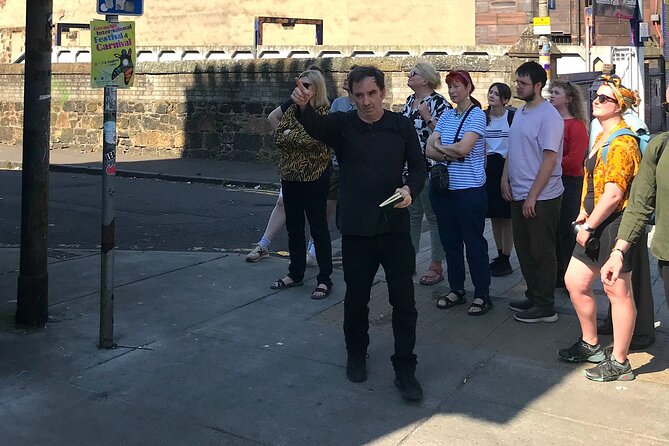
The walk begins at George House on George Square, a smart starting point because you immediately feel the civic center vibe. From there, the route turns toward Glasgow City Chambers—often described as the city’s most spectacular building. The point isn’t only the look of it. It’s the message: the sculptures and the styling reflect how Glaswegians pictured themselves in the 19th century.
You’ll also pass the Glasgow War Memorial, a concentrated dose of symbolism tied to those who fell in the First World War. Even in a short stop, it’s a reminder that Glasgow’s story isn’t only about trade and art. It’s also about loss, turning points, and how cities process big historical shifts.
Then come the statues—fast, memorable markers you can spot again later on your own. You start with Sir Walter Scott, set in George Square, and then you’ll reach Robert Burns, where the story has a surprisingly modern flavor.
Robert Burns and the statues that explain Glasgow’s identity
Standing by Robert Burns’ statue feels like a history lesson with a human twist. Burns is Scotland’s national poet, but this monument also tells a story about community support: it was the first-ever monument to him built through what’s described as crowdfunding. Thousands showed up for the unveiling, and even the “small” contribution amounts made headlines in their day.
Next, the route points you toward the business side of Glasgow through stops tied to merchants and trades. You’ll see Merchant’s House and Trades Hall of Glasgow, and both matter because they explain why Glasgow grew the way it did. This is where the city’s prosperity was organized and protected—by people running the trades, hiring skill, and caring for members who could no longer work.
Even if you’re not a museum person, these two stops give you a foundation. You start to notice patterns in the city: who had power, how they used buildings as signals, and how “respectability” worked in practice.
The Gallery of Modern Art and Paesano Pizza: old walls, modern pulse
One of the best surprises on this route is how the tour mixes culture with everyday life. The Gallery of Modern Art sits in a building with a past—originally a private mansion, then used in different ways before becoming a gallery. That history matters. It’s a reminder that Glasgow’s art scene didn’t just appear out of nowhere. It grew out of older wealth and older spaces.
And then there’s Paesano Pizza. This stop is short, but it’s memorable because it grounds the walk in now, not just then. The tour even shares a quirky local connection about the business and how it once offered a special job opportunity. It’s the sort of detail that makes you more confident about what to eat next.
If you’re wondering whether this is a “just photos and facts” kind of tour, this pairing answers that. You see art history and then you’re reminded that Glasgow still lives in the present tense too.
Wellington’s traffic cone and the Corinthian Club: when history turns playful
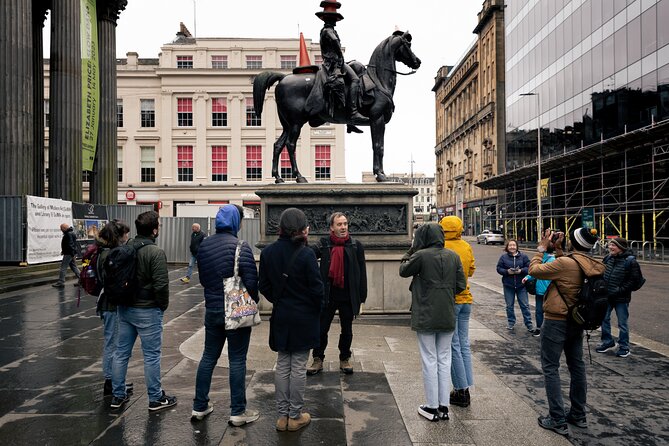
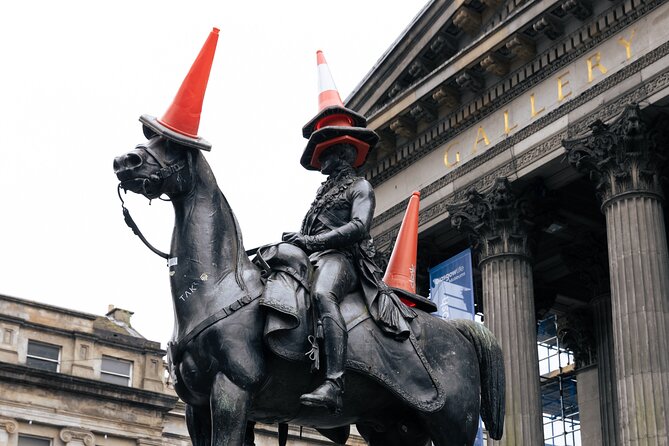
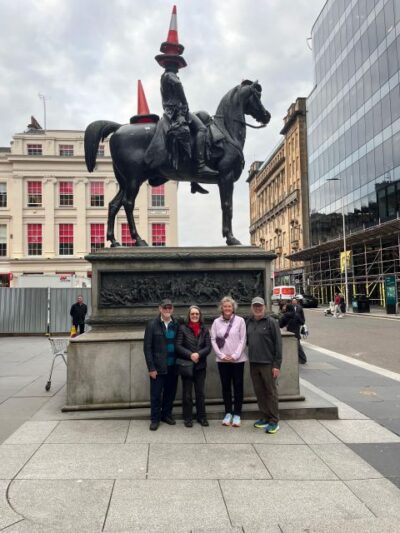
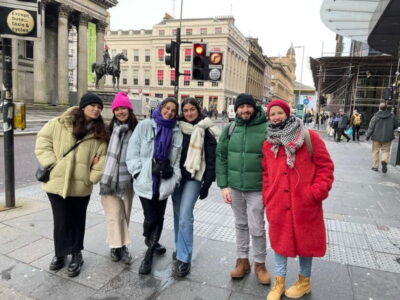
The route includes the Duke of Wellington statue, one of Glasgow’s best-known figures in bronze. The head is famous for something very modern: a traffic cone placed on it. That detail works on two levels. It’s funny on its own, and it also shows how locals keep revisiting history in their own way.
Then you’ll move toward the Corinthian Club. The building’s past uses are listed as far-reaching—formerly a bank, a courthouse, and a county building—before it became the club and wedding-venue it is today. It’s a nice reminder that buildings in city centers often change jobs as society changes its priorities.
This section is where the “mysterious” angle starts to feel real. You can look at the same walls and imagine different eras at work—money, law, community status—then see how the modern city repurposes it without erasing the bones.
- Glasgow: Celtic Park Stadium Tour★ 4.9 · 3,336 reviews
- Guided Celtic Park Stadium Tour★ 5.0 · 3,136 reviews
- Glasgow: City Sightseeing Hop-On Hop-Off Bus Tour★ 4.5 · 3,095 reviews
- From Glasgow: Oban, Glencoe, Highland Lochs & Castles Tour★ 4.9 · 2,123 reviews
- City Sightseeing Glasgow Hop-On Hop-Off Bus Tour★ 4.5 · 1,873 reviews
Medieval street signals, candle-makers history, and the Hutchinsons-era idea of care
Glasgow’s story isn’t only written in monuments. It’s written in streets and in who lived where.
The tour includes a stop tied to an important medieval street where candle makers lived and worked, separated from other old-town activity to reduce fire risk. Later, the same area shifted roles toward markets and warehouses, and today it’s part of Glasgow’s cultural district. Even with only a short stop, you learn to read the city like a timeline.
You’ll also hear about Saints of Ingram, connected to a trio of institutions described as providing the city’s graces of care—tied to the Merchants House, the Trades House, and Hutchenson’s Hospital. That last piece helps you understand something practical: these weren’t just grand buildings for show. They were social systems that supported citizens over long stretches of time.
If you like when a city’s architecture connects to real life, this is one of the strongest “why Glasgow looks like it does” sections.
Old Fruitmarket to Trongate 103: where trade met art
The tour heads through the area of City Halls & the Old Fruitmarket. The Old Fruitmarket building still stands, but its job has changed. You can walk through it and picture the commercial Glasgow of earlier times. That matters for first-time visitors because it turns “old building” into “old activity.”
Then you reach Trongate 103, which is an arts center in the heart of the district. The stop notes Sharmanka Kinetic Gallery, adding movement and modern creativity to the walk. This is another good moment to shift from architecture to people-making.
If you want to keep the experience going after the tour, this is where you’ll likely feel the pull. You’re not just told Glasgow has culture. You see a current-day arts space in the middle of historic streets.
Britannia Panopticon music hall and the Mercat Cross
Next comes Britannia Panopticon Music Hall—listed as the world’s oldest surviving music hall. That alone is a reason to pause. The stop also includes a neat early-performance connection to Stan Laurel, one half of the comedy duo The Laurel and Hardy legend.
It’s a quick stop, but it gives you something valuable: you learn to connect entertainment venues with Glasgow’s ongoing identity, not just with distant fame.
After that, the tour moves to Mercat Cross, a recreation of a medieval market cross where proclamations were made. Again, it’s brief, but it’s the kind of detail that makes the city make sense. You realize where public announcements would have happened, and why a market square served as a stage.
High Street, murals, and Ramshorn Theatre: the medieval spine to a 1824 story
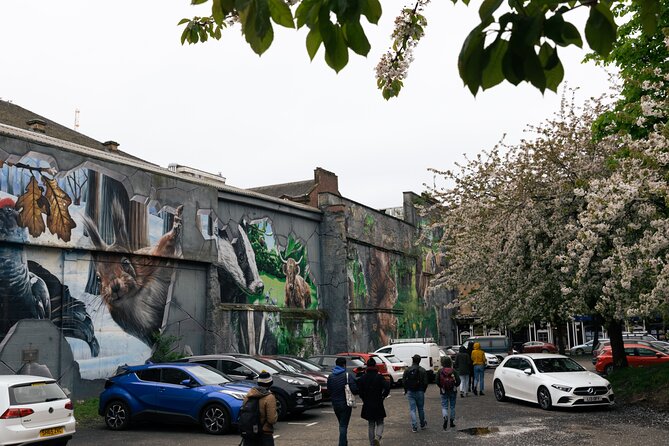
High Street is the heart of medieval Glasgow on this route, and the tour keeps it moving in a good way—focused on key sights along the road. You’ll hear about the site of the old university (described as the fourth oldest in Britain) and you’ll get pointed toward murals connected to St Mungo, plus other significant buildings.
Then comes David Livingstone, marked by a statue that originally stood in George Square. It’s a helpful reminder that cities rearrange themselves over time, and monuments travel too.
The route closes this “old-to-new” segment at Ramshorn Theatre. The building dates to 1824, replacing an earlier church. The stop also notes that many of Glasgow’s figures were buried there. Later, it served as a theatre, and now it’s a center for language studies owned by the University of Strathclyde. That’s a lot of history in a single building, and the structure of the stop helps you hold it in your head.
From the Royal Infirmary museum to Glasgow Cathedral and Provand’s Lordship
Near the end, you’ll see Friends Of Glasgow Royal Infirmary Museum, tied to the oldest hospital in Glasgow and medical innovations. That’s a different angle than the arts and commerce stops. It brings in Glasgow as a place that helped shape healthcare knowledge.
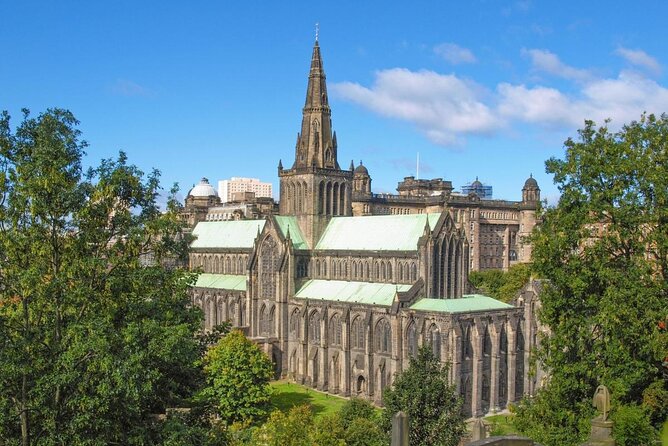
Then the tour finishes with the big sacred anchors: Glasgow Cathedral and nearby oldest-building stops. Glasgow Cathedral is described as dating to the 13th century, with a church on the site going back to the 6th century. Even if you only see parts inside, the age alone gives you a strong sense of continuity.
You’ll also pass Provand’s Lordship, described as dating back to the 14th century and one of the oldest buildings in Glasgow apart from the Cathedral. Finally, the tour includes St Mungo Museum of Religious Life and Art, built to look like an older building, focused on religious life and art from around the world.
This ending is ideal if you want a calm payoff after a day of stops with civic, trade, and entertainment energy. It feels like the route exhale.
Timing, weather, and how to get the most out of the walk
The tour runs about 2 hours and 45 minutes in practice. The shorter duration you might see listed elsewhere is basically the same idea, but the key point for you is this: it’s a steady walk with frequent “look up and listen” moments.
Wear shoes you trust. Plan for Glasgow weather. This experience requires good weather, so if it’s cancelled due to poor conditions, you should expect a different date offer or a full refund.
Also, stand where you can hear. With a max group size of 15, it’s usually manageable, but if you’re sensitive to audio, don’t hang back.
One more practical note: the tour ends outside the Ramshorn Church on Ingram Street, not back at the starting square. It’s still near enough that you can reposition easily, but you should plan to explore that area afterward.
Price and value: is $17.91 a fair deal for this many stops?
At $17.91 per person, the value is strong when you think about what you’re buying: time plus city context. You’re paying for an organized route that strings together major landmarks, plus a lot of “how Glasgow became Glasgow” narrative.
Another value booster is that the listed stops are marked admission ticket free. That means you’re not stacking extra entry fees at each place. You can spend your money on food and a couple of museum extras later, instead of paying for every pause on this walk.
This tour is a great fit if:
- You want an efficient first-day overview.
- You like architecture, statues, and street-level storytelling.
- You want weird-but-true details, like Burns’ crowdfunding and Wellington’s cone.
- You plan to spend more time afterward in Merchant City, High Street, or around the Cathedral.
It’s less ideal if you hate walking, you need a lot of quiet downtime, or you’re looking for only one deep museum experience. This is a “many stops, clear connections” kind of tour.
Should you book the Glasgow history walk?
Yes—if your goal is to get your bearings and learn how the center of Glasgow works. You’ll come away with a map in your head, plus a set of anchors: City Chambers, Burns, merchant-era buildings, the music hall, and the Cathedral.
Skip it only if you’re searching for long, slow stays inside one site. This is built as a moving story through the city’s core. For most first-time visitors, that’s exactly the point.
FAQ
How long is the Glasgow walking tour?
It runs for about 2 hours and 45 minutes, with walking time between attractions totaling around 40–45 minutes.
Where does the tour start and end?
It starts at George House, 50 George Square, Glasgow G2 1EH, and ends outside Ramshorn Church on Ingram Street at 98 Ingram St, Glasgow G1 1EX.
What language is the tour in?
The tour is offered in English.
Are there any admission fees at the stops?
The stops on this route are marked as admission ticket free.
How big is the group?
The tour has a maximum of 15 travelers.
What if the weather is bad?
This experience requires good weather. If it’s cancelled due to poor weather, you’ll be offered a different date or a full refund. Free cancellation is available if you cancel at least 24 hours before the start time.
More of the Backstory in Glasgow
- Glasgow: The Magnificent and Mysterious History of Glasgow
★ 4.9 · 302 reviews - Glasgow: Historical Walking Tour: Guided by a local actor
★ 4.5 · 198 reviews - Glasgow: Pubs & History Walking Tour with Beer Tasting
★ 5.0 · 81 reviews - Glasgow: Pubs & History Guided Walking Tour with Beer
★ 4.9 · 74 reviews
More Tour Reviews in Glasgow
- Glasgow: Celtic Park Stadium Tour
★ 4.9 · 3,336 reviews - Guided Celtic Park Stadium Tour
★ 5.0 · 3,136 reviews - Glasgow: City Sightseeing Hop-On Hop-Off Bus Tour
★ 4.5 · 3,095 reviews - From Glasgow: Oban, Glencoe, Highland Lochs & Castles Tour
★ 4.9 · 2,123 reviews - City Sightseeing Glasgow Hop-On Hop-Off Bus Tour
★ 4.5 · 1,873 reviews
Still browsing? A handful of other Glasgow trips worth a place on the list


Historical Tours, compared.
 ★ 4.9The Magnificent and Mysterious History of GlasgowFrom $18302 reviews
 ★ 4.5Historical Walking Tour: Guided by a local actorFrom $20198 reviews
 ★ 5.0Pubs & History Walking Tour with Beer TastingFrom $6381 reviews
 ★ 4.9Pubs & History Guided Walking Tour with BeerFrom $6274 reviews
Browse the lists this tour appears in