
Reviewed · GLASGOW FOOD TOURS & AFTERNOON TEA
Glasgow Gin Tea Experience
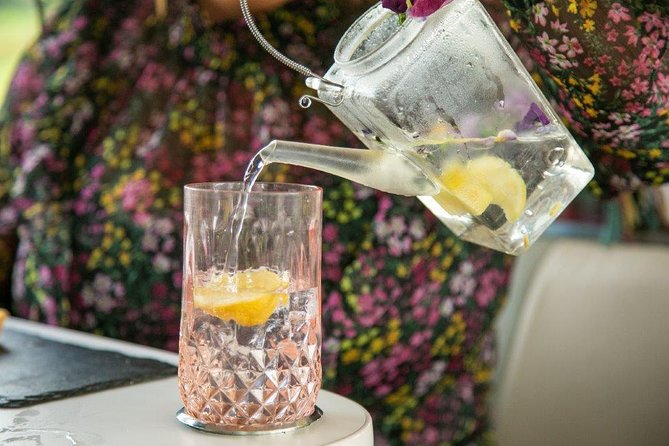
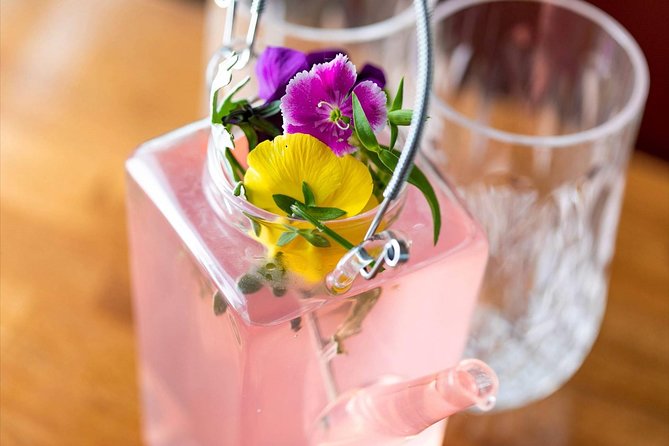
Gin tea and Glasgow views set the tone. This 90-minute, small-group dining experience rolls past major sights while you’re eating—think a warm, cream-and-jam scone right up front, plus mini quiche, sandwiches, and petit fours—so the sightseeing feels easy instead of rushed. I also really like how the hosts share practical Glasgow tips and help break the ice so you can chat with your table mates while the city goes by.
One thing to keep in mind: this is not a classic guided tour with live commentary, and the gin/alcohol theme may be limited at times—so plan your expectations around the tea, food, and views first.
In This Review
- Key Things You’ll Notice on This Gin Tea Bus
- Price and What Makes It Feel Like Value
- What the Experience Is Like: Vintage Bus Dining, Not a Lecture
- Food and Drinks: What You Actually Get at Your Table
- Your 90-Minute Route: Landmark Moments That Make Sense for First-Timers
- Gallery of Modern Art (GoMA)
- City Chambers (George Square)
- Glasgow Cathedral
- The Necropolis
- Tennent’s Wellpark Brewery
- Glasgow Tower (Tolbooth Steeple area)
- Doulton Fountain
- People’s Palace and Winter Gardens
- Kingston Bridge
- Clyde Arc Bridge
- Finnieston Crane
- SEC Armadillo
- OVO Hydro (SSE Hydro)
- The Clydeside Distillery
- Riverside Museum of Transport and Travel
- Glasgow Tower (Science Centre area)
- Tennent’s Bar Glasgow
- Hunterian Art Gallery
- University of Glasgow
- Kelvingrove Art Gallery and Museum
- Mitchell Library
- A Few Practical Tips So You Get the Most Out of It
- Should You Book the Glasgow Gin Tea Experience?
- FAQ
- FAQ
- How long is the Glasgow Gin Tea Experience?
- What’s the price per person?
- Is the tour ticket mobile?
- What food and drinks are included?
- Is there gin on this tour?
- Are the attractions on the route free to enter?
- Is there a toilet on the bus?
- Do you get live or recorded guided commentary during the ride?
- How suitable is it for families?
Key Things You’ll Notice on This Gin Tea Bus
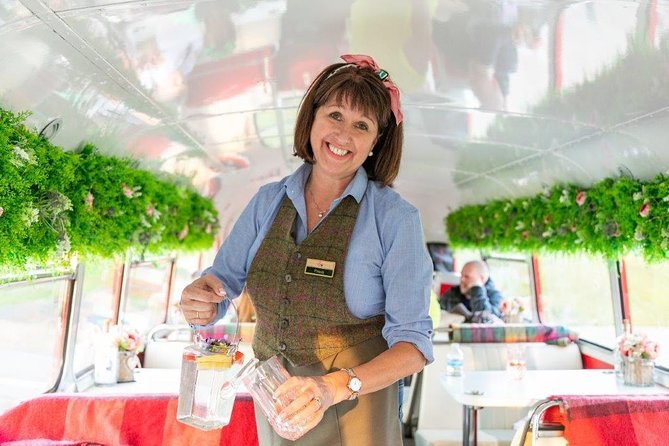
- Afternoon tea comfort, served on the move: warm scone, cream/jam, mini quiche, sandwiches, petit fours, and unlimited tea/coffee.
- Photo-friendly city landmarks: the route lines up big, recognizable Glasgow scenes for quick picture moments.
- Hosts over lectures: you’ll get tips and interaction, not a full history talk or constant guided narration.
- Tight timing: it’s about seeing a lot from the bus, not lingering long inside every building.
- Small group setup: up to 15 people, with shared tables expected on busier days.
Price and What Makes It Feel Like Value
At $69.31 per person, you’re paying for more than a seat on a bus. You’re buying a full tea spread (not just a cookie), plus a route designed to pass a lot of “first-time-in-Glasgow” highlights in a short window.
The value logic is simple: if you show up hungry and want a low-effort way to get your bearings, this works. If you’re mainly looking for a long museum-and-guide experience or you’re counting on a guaranteed gin pour, you’ll want to keep expectations grounded in the tea-and-snacks core.
Still peckish? More Glasgow food walks and afternoon teas in Glasgow


What the Experience Is Like: Vintage Bus Dining, Not a Lecture
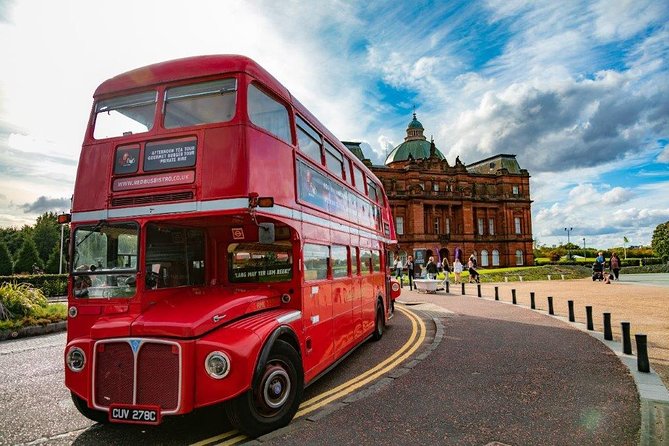
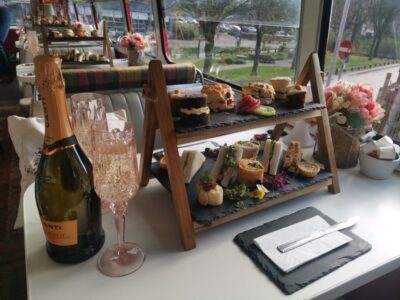
This runs as a dining experience on a Vintage Routemaster bus (so yes, it’s part of the fun). You’ll have a mobile ticket, and you’ll be eating throughout the ride—warm scone, cream and jam, strawberry garnish, handmade sandwiches, and little sweet finishes like petit fours.
Hosts interact and share tips, which is great for first-time visitors. But it’s also clear this is not built around continuous, formal commentary. If you want a deep, step-by-step guide on every stop, you may wish you’d booked a different style of tour.
Food and Drinks: What You Actually Get at Your Table
Here’s the heart of it: the tea service is the main event, and it’s thoughtfully layered.
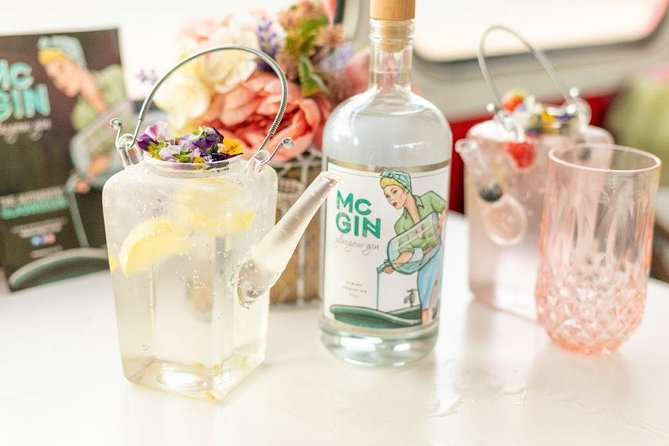
You’ll start with a warm scone with cream and jam and a strawberry garnish. Then you’ll move into handmade sandwich selections and a warm mini quiche, with unlimited tea and coffee keeping the cup refilled. After that, you finish with a selection of petit fours, which is a nice touch if you like sweet variety without committing to one giant dessert.
Alcoholic drinks may be available to purchase, but one important reality check from the operator’s own updates: at times, they’re unable to serve alcohol due to government restrictions. So if you’re in this specifically for gin, treat it as a bonus rather than the foundation.
Your 90-Minute Route: Landmark Moments That Make Sense for First-Timers
You get a concentrated look at Glasgow across different “eras” and styles—modern art, Victorian monuments, grand churches, and industrial waterfront vibes—without the stress of traffic or trying to hop between neighborhoods on your own.
The stops below are the kind of places your route is built around. In a short experience, think of this as “see it, learn a bit, grab photos if you can,” with the option to appreciate each landmark’s story on the spot.
Gallery of Modern Art (GoMA)
GoMA is a strong opener because it’s a world-class contemporary museum and a natural gathering place. Even if you don’t spend long inside, it’s the kind of stop that helps Glasgow feel more than just pubs and football.
Why it’s worth the mention: modern art gives you a different angle on the city’s confidence.
Possible drawback: time is limited, so you might only get a quick look rather than a full exhibit moment.
- Glasgow: Celtic Park Stadium Tour★ 4.9 · 3,336 reviews
- Guided Celtic Park Stadium Tour★ 5.0 · 3,136 reviews
- Glasgow: City Sightseeing Hop-On Hop-Off Bus Tour★ 4.5 · 3,095 reviews
- From Glasgow: Oban, Glencoe, Highland Lochs & Castles Tour★ 4.9 · 2,123 reviews
- City Sightseeing Glasgow Hop-On Hop-Off Bus Tour★ 4.5 · 1,873 reviews
City Chambers (George Square)
The City Chambers is one of those buildings that looks like it could host a ceremony or a scandal. It’s right at the center of George Square, and the architecture signals the city’s former wealth and industrial strength.
Why it’s worth it: it’s one of the most iconic civic buildings in the UK.
Quick caution: big buildings like this are often busy, so you’ll likely do more “look and photo” than “wander and linger.”
Glasgow Cathedral
Glasgow Cathedral is medieval, grand, and historically significant. It’s also notable for surviving the Reformation intact while many others didn’t, which makes it feel like a rare “original” thread through Scotland’s changing religious history.
What you’ll appreciate: the cathedral’s scale and the fact that it’s still standing with continuity.
Time reality: if you’re not used to church interiors, keep your visits short and focused on what grabs you.
The Necropolis
If Glasgow Cathedral represents the past of faith, the Necropolis shows the Victorian past of mourning and architecture. Modeled on Père-Lachaise in Paris, it’s a garden cemetery with striking monuments.
The standout detail: estimates point to around 50,000 burials and roughly 3,500 tombs.
Practical note: cemeteries can be surprisingly emotional and crowded in peak times, so take a calm pace.
Tennent’s Wellpark Brewery
This is where the city’s beer culture shows up in a tangible way. Tennent’s Wellpark Brewery has been part of Scotland for generations, producing award-winning brews since 1885.
Why it works for the tour: it connects Glasgow’s identity to something you can taste later.
Possible drawback: if you’re expecting a full brewery tour, this style of experience may be more “look and learn” than “behind-the-scenes tasting.”
Glasgow Tower (Tolbooth Steeple area)
The Tolbooth Steeple is a recognizable Glasgow landmark topping a historic clock-and-crown feature. It connects to the old Tolbooth, which once handled city governance and even included council hall and prison functions.
Why it matters: it’s a reminder that Glasgow’s “center of town” history includes law and order, not just shopping streets.
Photo tip: plan for angles that catch the clock and crown clearly.
Doulton Fountain
This ceramic fountain draws attention because it’s tied to the 1888 International Exhibition, when it drew massive crowds. The scale is part of the story—it’s described as the largest fountain ever constructed in ceramic.
Why I love this kind of stop: it’s a quirky, high-skill industrial-art artifact hiding in plain sight.
How to approach it: it’s great for quick photos, especially if light is cooperating.
People’s Palace and Winter Gardens
People’s Palace gives Glasgow a “how people lived” focus. It’s in historic Glasgow Green and includes objects, photographs, prints, and film that map everyday life from the past into the present.
Why it’s a smart stop: it’s human-scale history, not just stone and dates.
Potential drawback: if you prefer architecture only, you might want to keep expectations flexible for how much museum content you see.
Kingston Bridge
Kingston Bridge is a big engineering landmark that signals how Glasgow thinks about moving through a city. It’s a ten-lane road bridge, and it’s extremely busy, with about 150,000 vehicles every day.
Why it’s interesting: it puts the River Clyde story into modern infrastructure.
Practical note: this is one of those stops best enjoyed from a good viewing angle rather than trying to “soak in” for long.
Clyde Arc Bridge
The Clyde Arc is another River Clyde crossing, known for its curved, angled design. It connects Finnieston near the Clyde Auditorium and SEC with the Pacific Quay and the Glasgow Science Centre area.
Why it’s memorable: you’ll likely get at least one clear view of how the bridge curves across the water.
Quick caution: weather matters. Wind off the river can feel colder than you expect.
Finnieston Crane
The Finnieston Crane, also called Stobcross Crane, is a disused giant cantilever crane that still stands as an engineering symbol. It’s tied to loading cargo—especially steam locomotives—onto ships for export.
Why it’s a great contrast: it’s industrial heritage you can still see in the skyline.
Photo note: get shots from multiple angles if you can, because it reads differently depending on where the light hits.
SEC Armadillo
The SEC Armadillo is a landmark building with a distinctive shape, designed by Foster + Partners and opened in 1997. It’s part of the Scottish Events Campus waterfront area and helped usher in a new era for the site.
Why it’s worth attention: it shows modern Glasgow design thinking.
Time reality: you may catch it more as a skyline landmark than as an inside visit.
OVO Hydro (SSE Hydro)
The SSE Hydro is the multi-purpose indoor arena, and the tour route often frames it as a key waterfront destination. Originally named The Hydro after sponsor Scottish Hydro, it’s a place where big events happen.
Why it’s useful for context: it gives you a sense of where Glasgow hosts large-scale performances and conferences.
Practical note: if you aren’t attending something that day, you’ll enjoy it best from the outside.
The Clydeside Distillery
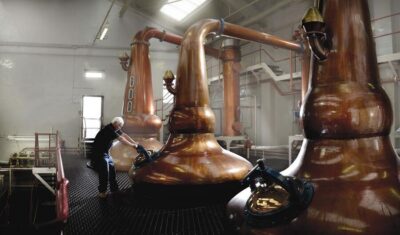
This is Glasgow’s first dedicated single malt Scotch whisky distillery in over 100 years, with a visitor experience, a café, and a specialist whisky shop.
Why it fits the theme: it connects to Scotland’s drinking traditions in a modern way.
Potential drawback: the experience here may be more about awareness than in-depth tasting, depending on how your time is managed.
Riverside Museum of Transport and Travel
This museum gets mentioned for a reason: it’s award-winning and packed with more than 3,000 objects. You’ll find everything from skateboards to locomotives, prams to cars, and even a Stormtrooper, which tells you how welcoming and playful it can be.
Why it’s special: transport museums are often fun even for people who don’t think they like “museums.”
Time reality: you can’t see everything in a short stop, so focus on what catches your eye.
Glasgow Tower (Science Centre area)
The Glasgow Tower is a free-standing tower on the south bank that belongs to the Glasgow Science Centre complex. It’s another way the tour balances engineering and city identity with learning.
Why it works on this route: it keeps the “Glasgow as inventive” theme going.
Photo tip: the tower reads well against river and sky.
Tennent’s Bar Glasgow
This is the local, classic pub stop many visitors want at some point. Tennent’s Bar is known as a much-loved West End spot with lively banter and great beers and food.
Why I like a stop like this: it anchors the day in the Glasgow you can actually feel.
Practical caution: pubs can be noisy; if you want calm conversation, plan accordingly.
Hunterian Art Gallery
Hunterian Art Gallery has one of Scotland’s notable public art collections. It includes works by artists like Rubens and Rembrandt, and also Scottish artists such as the Scottish Colourists and Glasgow Boys.
Why it’s a strong stop: it’s the “big-name” art museum option that still feels accessible.
Time reality: you’ll need to pick highlights rather than attempt everything.
University of Glasgow
The University of Glasgow dates back to 1451, and it’s associated with major figures like Adam Smith, James Watt, and Lord Kelvin. That history makes the campus feel like a long-running engine for ideas.
Why it’s a good idea for a quick stop: universities explain why cities change—teachers, research, and students shape the future.
Practical note: campus views depend on where you’re able to stand and walk.
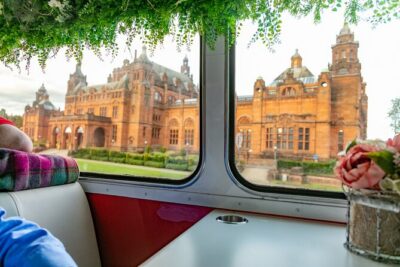
Kelvingrove Art Gallery and Museum
Kelvingrove opened in 1901 and remains a local favorite. It has strong architecture and a family-friendly vibe, which makes it easy to “get” even if you’re short on time.
Why it’s on the route: it’s a signature Glasgow museum setting.
Possible drawback: if you want a deep museum experience, this tour won’t replace a longer visit.
Mitchell Library
The Mitchell Library is an iconic Glasgow landmark at Charing Cross and part of Glasgow Libraries’ wider network. It holds major Scottish and international collections and is described as accessible for research, inspiration, and even support for new businesses.
Why it’s worth a look: libraries are where cities store their future.
Reality check: you may only have time for an exterior or quick orientation, not a full reading-room session.
A Few Practical Tips So You Get the Most Out of It
- If you care about the gin/alcohol side, ask early how service is running that day. The food setup is consistent; alcohol can be variable.
- Bring your phone camera for exterior shots. Some stops are best appreciated from the street or river viewpoints.
- Scotland weather changes fast. Layer up so you don’t feel miserable during any brief outdoor views.
- Use the restroom before you go if possible. There’s no toilet on board, and this is short enough that you don’t want to scramble.
Should You Book the Glasgow Gin Tea Experience?
I’d book it if you want a low-stress, first-time-in-Glasgow overview that includes a real tea service and multiple iconic stops in a compact time window. It’s a good fit for couples, small friend groups, and anyone who likes chatting with new people while eating something warm.
I would hesitate if you’re mainly after a full guided tour with constant commentary, or if you’re expecting gin as the guaranteed centerpiece. In this format, the tea and sweets come first, and the landmark viewing is more about the route and photo moments than long, guided deep dives.
FAQ
FAQ
How long is the Glasgow Gin Tea Experience?
It runs for about 1 hour 30 minutes.
What’s the price per person?
The price is $69.31 per person.
Is the tour ticket mobile?
Yes, it uses a mobile ticket.
What food and drinks are included?
You get a warm scone with cream, jam, and strawberry garnish, handmade sandwich selections, a warm mini quiche, unlimited tea and coffee, a selection of petit fours, and coffee or tea. Alcoholic beverages are available to purchase.
Is there gin on this tour?
The experience is named Glasgow Gin Tea Experience, but alcohol service may be limited at times due to government restrictions, so you should treat gin/alcohol as not guaranteed. You can focus on the tea and food as the steady part of the experience.
Are the attractions on the route free to enter?
The stops listed for museums and landmarks show admission ticket free.
Is there a toilet on the bus?
No, there is no toilet on board.
Do you get live or recorded guided commentary during the ride?
No. It’s described as a dining experience while touring, with interaction rather than live or recorded guided commentary.
How suitable is it for families?
It’s stated to be not suitable for children 5 years old and under. Anyone under age 14 must be accompanied by an adult. Most travelers can participate.
More Food Tours & Afternoon Teas in Glasgow
- Glasgow: Celtic Park Stadium Tour and Dining Experience
★ 4.9 · 1,221 reviews - Glasgow Afternoon Tea Experience
★ 4.5 · 735 reviews - Glasgow: Vintage Bus Tour with Afternoon Tea or Gin
★ 4.5 · 434 reviews - Glasgow: Food and Drink Tour
★ 4.8 · 63 reviews - Glasgow Evening Dining Experiences
★ 4.5 · 38 reviews
More Tour Reviews in Glasgow
- Glasgow: Celtic Park Stadium Tour
★ 4.9 · 3,336 reviews - Guided Celtic Park Stadium Tour
★ 5.0 · 3,136 reviews - Glasgow: City Sightseeing Hop-On Hop-Off Bus Tour
★ 4.5 · 3,095 reviews - From Glasgow: Oban, Glencoe, Highland Lochs & Castles Tour
★ 4.9 · 2,123 reviews - City Sightseeing Glasgow Hop-On Hop-Off Bus Tour
★ 4.5 · 1,873 reviews
Still browsing? A handful of other Glasgow trips worth a place on the list



Glasgow Food Tours & Afternoon Tea, compared.
 ★ 4.9Celtic Park Stadium Tour and Dining ExperienceFrom $581,221 reviews
 ★ 4.5Glasgow Afternoon Tea ExperienceFrom $61735 reviews
 ★ 4.5Vintage Bus Tour with Afternoon Tea or GinFrom $58434 reviews
 ★ 4.8Food and Drink TourFrom $14963 reviews
 ★ 4.5Glasgow Evening Dining ExperiencesFrom $5938 reviews
 ★ 4.8Haggis Tasting with a Dram of Scottish WhiskyFrom $1920 reviews
Browse the lists this tour appears in