
Reviewed · PRIVATE
Glasgow Private Self-Guided Tour
Glasgow tells its story at walking speed. This private self-guided tour uses an audio guide from Alex plus GPS directions so you can move through Glasgow’s layers without rushing. You’ll stitch together medieval worship, Victorian ambition, and street-art storytelling in about 2 to 3 hours.
I like two things most. First, the stop-by-stop Glasgow Cathedral to Necropolis arc makes the city feel coherent, not random. Second, the focus on murals and specific artwork (including Smug’s pieces) turns ordinary streets into an easy-to-follow cultural route. One thing to consider: the app-based navigation can be fiddly, and some people report audio volume or clarity issues, so bring headphones you trust and plan for a little tech patience.
In This Review
- Key Highlights I’d Prioritize
- Price and What You’re Actually Paying For
- Getting Started: Meet at Glasgow Cathedral, Then Let GPS Do the Work
- Glasgow Cathedral: Why This Building Matters Long After You Leave
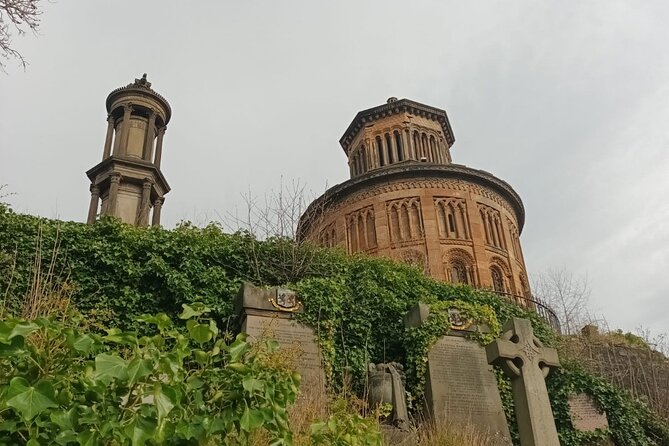
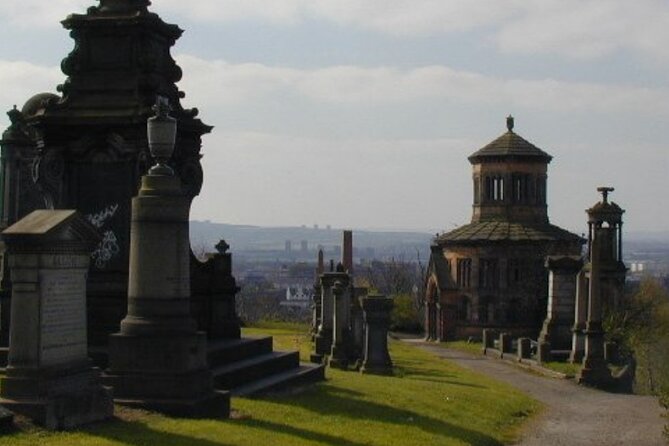
- Glasgow Necropolis: A 37-Acre Graveyard Built to Impress
- Provand’s Lordship and the Trick of Old Buildings
- Murals in Glasgow: How the City Turns Walls Into Notes
- University of Strathclyde: Architecture Meets Street-Art Signals
- St Enoch Cradling St Mungo: A Mural With a Mission
- Tron Theatre and Trongate: Saint Stories Hidden in Street Names
- Glasgow Police Museum: When Civic Power Becomes a Walkable Story
- Smug Murals: Fellow Residents of Glasgow and the Fun of Looking Closely
- Merchant City Stops: 98 Ingram St, Mercury, and George Square
- Buchanan Street, The Lighthouse, and the End at St Enoch
- What the App Experience Feels Like (When It Works)
- How Long It Really Takes: 2–3 Hours, or More If You Stop for Life
- Who Should Book This Glasgow Private Self-Guided Tour
- Should You Book This Tour or Pick Something Else?
- FAQ
- How long is the Glasgow Private Self-Guided Tour?
- Where does the tour start and end?
- What is the price per person?
- Is there a live guide with this experience?
- Are there admission fees for the sights mentioned?
- What languages is the tour offered in?
- Do I need to download an app to use the tour?
- How does the audio guide work?
- How long do I have access after booking?
- Are service animals allowed?
Key Highlights I’d Prioritize
- Alex-led audio that’s not computer-generated, with audio plus videos, pictures, and recommendations
- Free-entry stops for major points like Glasgow Cathedral and the Necropolis, so your money goes to the tour, not tickets
- Smug mural trail built into the walk, with named works like Fellow Residents of Glasgow and Honey, I shrunk the Kids
- Deep local context at places people often skip, like the Glasgow Police Museum and Merchant City details
- Ending near St Enoch subway so you can plug back into transit fast rather than backtracking
Price and What You’re Actually Paying For
At about $12.37 per person, this is priced like a low-cost city pass for a walking route, not like a paid guided excursion. The big value is that many highlighted stops list free admission, which keeps your total day from ballooning with entry fees.
You also get 3 weeks unlimited access to the self-guided tour on the app. That matters if your schedule changes, you want to repeat it, or you take longer than planned and don’t want to stress about a strict ending time.
Let a Glasgow local lead the way on more guided outings in Glasgow

Getting Started: Meet at Glasgow Cathedral, Then Let GPS Do the Work
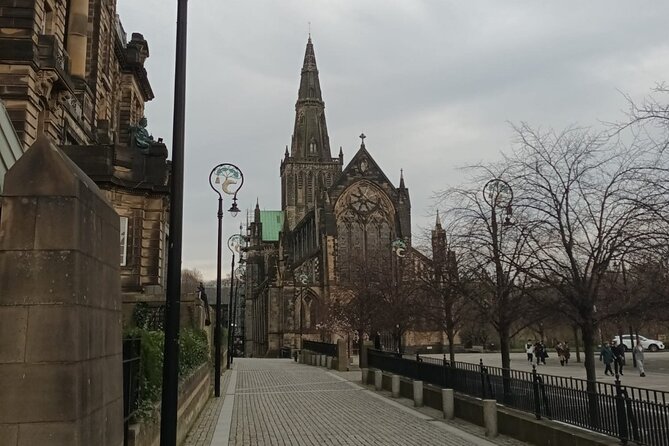
You start at Glasgow Cathedral (Castle St, G4 0QZ) and finish at St Enoch subway station (G1 4BW). You’ll activate the experience from instructions emailed to you after booking, and the note that your booking reference is not the activation code is worth paying attention to before you’re standing on Castle Street.
Once you launch the tour, you’re using the Pandemic Tours app with a map, directions, and a GPS route. The experience is private in the sense that only your group participates, not a group of strangers sharing the same audio.
Practical tip: before you step outside, confirm your phone battery level and test your audio volume. Some listeners have had trouble hearing the narrator clearly, and you don’t want that moment to happen after you walk a few blocks.
Glasgow Cathedral: Why This Building Matters Long After You Leave
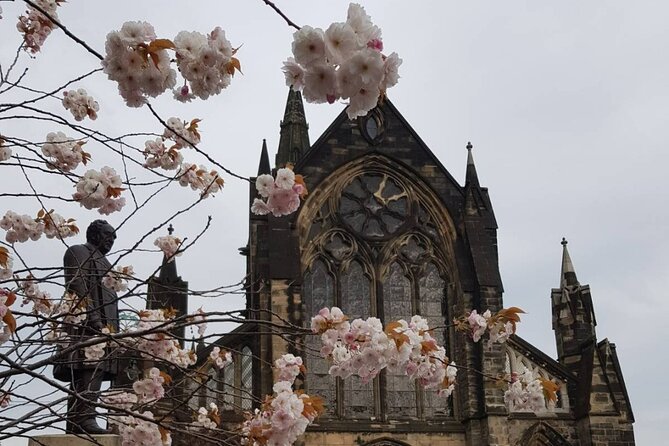
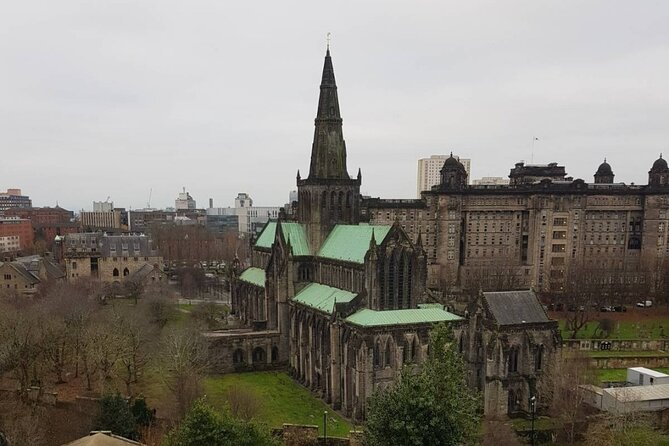
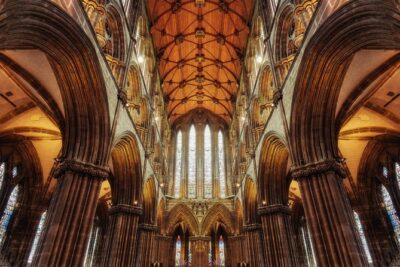
The walk’s first big anchor is Glasgow Cathedral. This stop is focused on the current cathedral’s origin story: after a fire destroyed the earlier building just after construction in 1136, the version you see is associated with 1197, and worship has continued inside for more than 800 years.
The tour pacing makes sense here. You’re allotted about 30 minutes, which is long enough to take in scale, then listen to the story without feeling stuck in one spot. If you like history but hate museum-overload, this is a good entry point because the Cathedral itself does most of the visual work.
One consideration: if you’re visiting during busy times, you may need to share space with other visitors. Still, free admission means you can treat this as a real stop, not a hurried photo break.
Glasgow Necropolis: A 37-Acre Graveyard Built to Impress
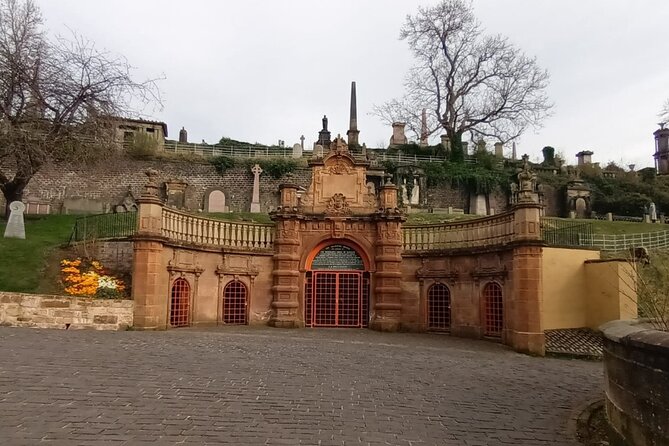
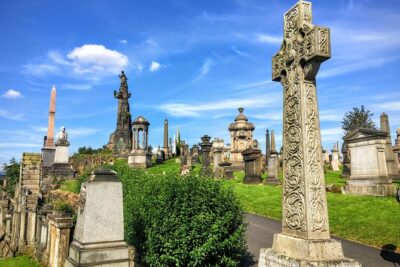
Next up is The Glasgow Necropolis, introduced as Glasgow’s most famous graveyard. It was established in 1831, modeled after Paris’s Père Lachaise, and the tour frames it as a place where wealthy Glaswegians wanted to present themselves well even after death.
You’ll walk through the idea of scale: 37 acres, compared to about 15 soccer fields or roughly 150,000m². The tour gives you about 15 minutes, which is the right length for reading the atmosphere—stone, paths, and skyline—without turning the day into an all-day cemetery marathon.
Why I think this stop works: it’s not just “where people are buried.” It’s how Glasgow thought about status, memory, and the future. Even if you skip reading every plaque, the cemetery’s layout gives you the story in physical form.
Provand’s Lordship and the Trick of Old Buildings
Between the Necropolis and the next highlights, you’ll be pointed to a “lovely stone building” known as Provand’s Lordship (it was formerly called the Hospital of St Nicholas). The tour doesn’t just label it; it connects the building to how Glasgow preserved (and repurposed) stone over time.
Right after that, you’ll also get an early-modern story about another old structure: you’ll be standing where records go back to at least 1626, with a note that it functioned across roles such as Town Clerk’s office, Justice Court, Town Council, and at the top level, a jail (for security reasons).
This is one of those moments where a self-guided format shines. You’re not required to memorize dates; you just learn what this place did, which helps you notice architectural clues and changes without guessing.
Just your group: more private tours around Glasgow
- Private Tour of Highlands, Oban, Glencoe, Lochs & Castles from Glasgow★ 5.0 · 169 reviews
- Half-Day Private Glasgow Must-Sees Tour★ 5.0 · 165 reviews
- Private Glasgow West End Walking Tour★ 5.0 · 66 reviews
- Glasgow: Private custom tour with a local guide★ 4.5 · 50 reviews
- Kelpies and Falkirk Wheel Private Tour for 1 – 4 people from Greater Glasgow★ 5.0 · 49 reviews
Murals in Glasgow: How the City Turns Walls Into Notes
Glasgow is known for murals, and this route uses them as navigation and storytelling. After the Necropolis, you’re set up to follow a mural trail logic: neglected walls and gable ends were revitalized, and street art was used as a way to change perceptions.
You’ll see the blend of art and architecture in two different “types” of stops:
- murals tied to specific people and saints
- murals that feel more like fantasy landscapes you find by walking
A key win is that the route names the artworks. That helps you look instead of just passively “seeing paint.”
University of Strathclyde: Architecture Meets Street-Art Signals
You’ll stop at University of Strathclyde, described as one of Glasgow’s three major universities and a must-see for its combination of architecture and murals. The tour gives roughly 15 minutes, which is enough to pause, look around, and connect the setting to the mural context that’s been building across your walk.
If you like cities where education and culture share physical space, this is a nice break from purely “old Glasgow” stops. It keeps the day balanced.
St Enoch Cradling St Mungo: A Mural With a Mission
One of the most specific art stops is St Enoch cradling St Mungo. The tour describes it as a mother lovingly cradling a baby, with a futuristic representation of St. Mungo. You also get guidance to look for details and connect the saint to the story behind the mural.
This matters because Glasgow mural culture isn’t random; it’s layered with local identity. When you learn who’s represented, you see more in the artwork than color and style.
Tron Theatre and Trongate: Saint Stories Hidden in Street Names
As you move along, you’ll encounter the tower of Tron church, which today is Tron Theatre, on Trongate. The tour’s story here is clever: the street was once known as Saint Thenew’s Gait, tied to the supposed site of Thenew’s burial.
Then the puzzle piece clicks: Thenew, better known as Saint Enoch, is the mother of Saint Mungo. Suddenly you’re not just walking through streets—you’re walking through a set of religious family links hidden in place names.
This stop is short (about 5 minutes), but the value is in the explanation. It’s the kind of detail you’d never notice on your own unless you already knew the names.
Glasgow Police Museum: When Civic Power Becomes a Walkable Story
A standout cultural detour is the Glasgow Police Museum, highlighted for telling the history of the police force from 1800 to 1975. The tour points out that Glasgow had the first police force across Great Britain and uses the museum to frame people and events that shaped the city.
Even if you only take in a portion, this stop gives you a different angle on Glasgow than the Cathedral and the Necropolis. It’s the civic side of history—how order, power, and public life developed.
Smug Murals: Fellow Residents of Glasgow and the Fun of Looking Closely
Two named mural moments anchor the later sections.
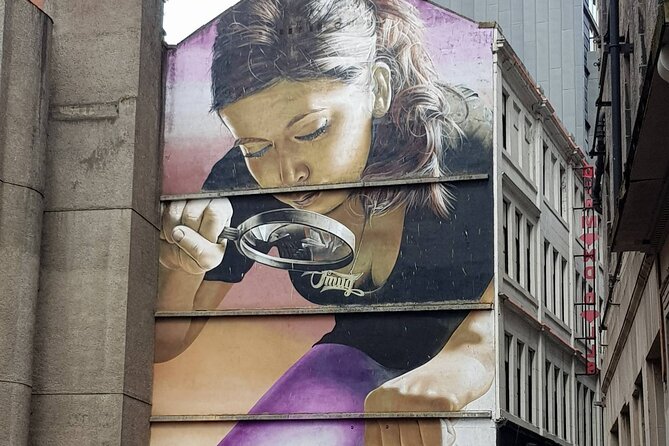
First is Fellow Residents of Glasgow, painted by Smug. The description focuses on a hiker foraging for mushrooms in woodlands, with animals framed as appearing through holes in the wall. You get an explicit cue to look for Glasgow’s parks and green spaces animals in the mural.
Later comes the final Smug piece: Honey, I shrunk the Kids, described as photo-realistic street art. The tour sets it up as a final visual payoff before finishing near St Enoch subway station.
If you’re the kind of person who likes to spot details (and not just take one quick photo), these murals make the walk feel like a hunt, in a good way.
Merchant City Stops: 98 Ingram St, Mercury, and George Square
After the mural-focused stretches, the route shifts toward Merchant City and the buildings tied to wealth and civic identity.
At 98 Ingram St, the tour explains the church was built in 1824, replacing an older version designed by English architect Thomas Rickman in a gothic revival style. You’ll also be told to look for the graves of tobacco merchants Andrew Buchanan and John Glassford, plus how the older Ramshorn cemetery (partly covered by Ingram Street) was once the fashionable place to be buried before the Necropolis became the new trend.
Then comes a statue stop: Mercury, the Roman god of financial gain, commerce, eloquence, poetry, travellers, boundaries, luck, trickery, and thieves. Mercury stands on a marble plinth, and there are two sculptures made by Alexander Sandy Stoddart, connected here to the Italian quarter of Merchant City.
And then you reach a big civic stage: the City Chambers, completed in 1888 and inaugurated by Queen Victoria (with her statue opposite in George Square). The tour also nods to a popular TV-world connection with a London registry office, but it leaves you to guess the exact series reference.
Finally, George Square gets its own origin story. It’s named after King George III, laid out starting as early as 1781 for a grid-style Georgian city center, and then developed about 20 years later.
What I like about this section: it’s where Glasgow becomes legible. You see how wealth, street names, and civic power show up in stone and bronze.
Buchanan Street, The Lighthouse, and the End at St Enoch
You’ll arrive at Buchanan Street and get the tour’s time-travel framing: from medieval Cathedral days to tobacco merchants and then forward into today’s lively center.
The tour includes The Lighthouse, described as a visitor centre, exhibition space, and event venue in the heart of Glasgow. It’s a useful way to land the afternoon before you move on.
The walk then finishes with the last Smug mural and closes near St Enoch subway station, which the route presents as a full-circle ending. Practically, it’s a smart finish point because you’re not stuck far from transport.
If you’re trying to keep your day efficient, this ending is helpful. You can get off the street loop and head to dinner without retracing every step.
What the App Experience Feels Like (When It Works)
This is an audio-led, app-based self-guided route. That can be a dream if your phone battery and sound settings cooperate. You’ll get GPS directions and stop-by-stop narration plus multimedia (videos, pictures, recommendations).
The more realistic approach: plan your “mental flow.” When the app requires switching screens (some users find the navigation cumbersome), it can break your attention at key moments—especially when you’re between murals and want to keep looking without rushing.
My practical advice:
- use solid headphones or earbuds
- start the tour with enough battery for a 2 to 3 hour walk (or longer if you linger)
- expect to pause and restart a section if you lose your place, rather than assuming everything will be effortless every time
How Long It Really Takes: 2–3 Hours, or More If You Stop for Life
The tour is listed at about 2 to 3 hours, but this kind of walk is flexible. If you stop to read details, take photos of murals, or want a quick snack break, you can easily stretch it.
One reader-style approach that works well here: treat it like a “highlight loop” rather than a checklist. Hit the Cathedral, Necropolis, and at least one mural stop, then let your curiosity pick the rest.
That pacing is where self-guided tours tend to win. You’re not waiting for anyone else’s photos.
Who Should Book This Glasgow Private Self-Guided Tour
This tour is a strong match if:
- you want a walkable highlights route that’s still specific (named murals, named buildings)
- you like blending history with street art, not choosing only one
- you prefer control over timing, so you can linger at places that catch your eye
- you’re comfortable using a phone app for navigation and audio
It may be less ideal if:
- you hate tech steps in the middle of a walk
- you need audio narration to be perfectly loud and easy at all times
- you’re expecting a live human guide (this is not that kind of experience)
Should You Book This Tour or Pick Something Else?
Book it if you want a focused Glasgow loop that mixes Cathedral gravitas, Victorian burial ambition, civic stories, and Smug murals, all stitched together by GPS and Alex’s audio. The price is low enough that you won’t feel trapped if you only fully enjoy half the stops.
I would not book it if you’re expecting a smooth, hands-free experience without any app quirks. If your phone audio often struggles outdoors, do a quick test before committing.
If you’re the type who enjoys seeing how a city talks through its buildings and walls, this is a very practical way to do Glasgow in a single afternoon.
FAQ
How long is the Glasgow Private Self-Guided Tour?
It runs about 2 to 3 hours.
Where does the tour start and end?
It starts at Glasgow Cathedral, Castle St, G4 0QZ and ends at St. Enoch subway station, G1 4BW.
What is the price per person?
The price is $12.37 per person.
Is there a live guide with this experience?
No. It’s a self-guided audio tour with no live guide included.
Are there admission fees for the sights mentioned?
The tour lists free admission tickets for mentioned stops like Glasgow Cathedral and the Glasgow Necropolis. Entrance fees are not included.
What languages is the tour offered in?
It’s offered in English.
Do I need to download an app to use the tour?
Yes. You’ll need to download the Pandemic Tours app after booking confirmation.
How does the audio guide work?
You’ll have an audio guide from Alex with audio (not computer-generated voice), plus videos, pictures, and recommendations in the app.
How long do I have access after booking?
You get 3 weeks unlimited access to the self-guided tour in the app.
Are service animals allowed?
Yes, service animals are allowed.
More Local-Led Days around Glasgow
- Guided Celtic Park Stadium Tour
★ 5.0 · 3,136 reviews - Glasgow City Centre Walking Tour with Local Guide
★ 5.0 · 1,326 reviews - Glasgow: Ghouls, Ghosts & Gruesome Tales Guided Walking Tour
★ 4.9 · 887 reviews - Glasgow: City Center Guided Walking Tour
★ 4.7 · 759 reviews - Glasgow: Street Art Guided Walking Tour
★ 4.8 · 385 reviews
More Tours in Glasgow
- Glasgow: Celtic Park Stadium Tour
★ 4.9 · 3,336 reviews - Guided Celtic Park Stadium Tour
★ 5.0 · 3,136 reviews - Glasgow: City Sightseeing Hop-On Hop-Off Bus Tour
★ 4.5 · 3,095 reviews - From Glasgow: Oban, Glencoe, Highland Lochs & Castles Tour
★ 4.9 · 2,123 reviews - City Sightseeing Glasgow Hop-On Hop-Off Bus Tour
★ 4.5 · 1,873 reviews
More Tour Reviews in Glasgow
- Glasgow: Celtic Park Stadium Tour
★ 4.9 · 3,336 reviews - Guided Celtic Park Stadium Tour
★ 5.0 · 3,136 reviews - Glasgow: City Sightseeing Hop-On Hop-Off Bus Tour
★ 4.5 · 3,095 reviews - From Glasgow: Oban, Glencoe, Highland Lochs & Castles Tour
★ 4.9 · 2,123 reviews - City Sightseeing Glasgow Hop-On Hop-Off Bus Tour
★ 4.5 · 1,873 reviews
Still browsing? A handful of other Glasgow trips worth a place on the list




Private, compared.
 ★ 5.0Private Tour of Highlands, Oban, Glencoe, Lochs & Castles from GlasgowFrom $902169 reviews
 ★ 5.0Half-Day Private Glasgow Must-Sees TourFrom $352165 reviews
 ★ 5.0Private Glasgow West End Walking TourFrom $9366 reviews
 ★ 4.5Private custom tour with a local guideFrom $6450 reviews
 ★ 5.0Kelpies and Falkirk Wheel Private Tour for 1 – 4 people from Greater GlasgowFrom $73049 reviews
 ★ 5.0Private Tour Loch Lomond Stirling and the Kelpies from GlasgowFrom $71647 reviews
 ★ 5.03-Hour Private Glasgow Essentials TourFrom $30846 reviews
 ★ 5.0Glasgow Private Bike Tour: Highlights & Hidden GemsFrom $23933 reviews